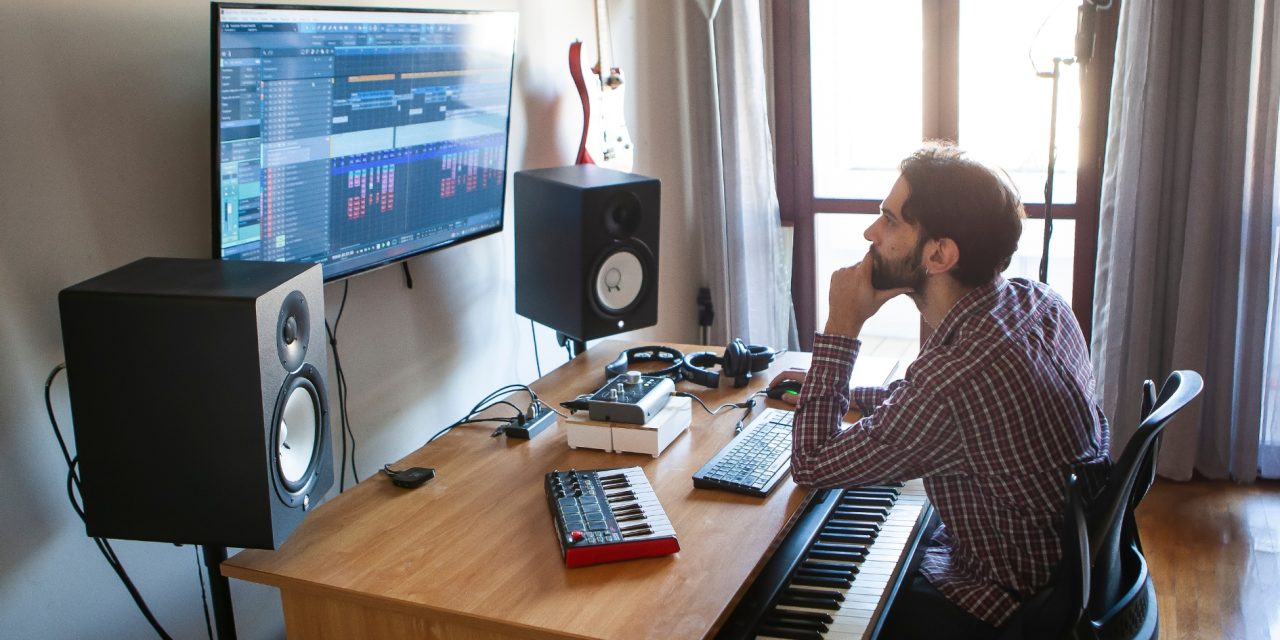
For years, accurate monitoring demanded large rooms and expensive acoustic treatment. Small home studios were stuck fighting reflections, bass buildup, and uneven frequency response — often requiring thousands of dollars in panels and traps just to get close to flat.
That equation has changed.
New 3–5″ nearfield monitors with integrated DSP now deliver ±2dB accuracy in compact spaces that once demanded $5,000 in treatment. Instead of renovating walls, producers can correct the room digitally and mix confidently at a desk.
This isn’t about shrinking expectations. It’s about shrinking the room requirement
Compact Nearfield Speakers Built for Desks
The IK Multimedia iLoud Micro Monitor packs impressive performance into a 3″ footprint, delivering extended frequency response with built-in room correction. For producers working on 18-inch desks or portable laptop setups, this kind of compact monitoring solves a real problem without sacrificing clarity.
The Genelec 8331A pushes precision further with advanced coaxial design and DSP control, offering critical listening detail in remarkably tight spaces. Meanwhile, the Adam Audio T5V remains a strong midrange-focused option for balanced mix checks, and the JBL 104-BT delivers an affordable entry point with Bluetooth convenience.
For producers needing more low-end extension without overwhelming a desk footprint, the Kali LP-6 v2 includes boundary EQ controls that help counter wall proximity issues common in apartments and bedrooms.
| Model | Size | Frequency Response | DSP | Best For |
| Genelec 8331A | 3″ | 45Hz–37kHz | Yes | Critical detail |
| Adam T5V | 5″ | 45Hz–25kHz | No | Balanced mix checks |
| JBL 104-BT | 4″ | 60Hz–20kHz | Basic | Budget setups |
| IK iLoud Micro | 3″ | 40Hz–40kHz | Yes | Ultra-compact desks |
| Kali LP-6 v2 | 6.5″ | 39Hz–25kHz | Boundary EQ | Bass extension |
Pairing these monitors with interfaces like the Focusrite Scarlett 2i2 ensures low-latency monitoring inside modern DAW workflows. Nearfields reduce reflections by design. Add isolation pads, and low-end tightens even further.
Desktop Monitors Under 5 Inches That Actually Compete
Small monitors used to mean compromised bass and exaggerated mids. That trade-off is narrowing fast.
Models under 5 inches now use boundary compensation, rear-port tuning, and DSP filtering to defeat common small-room issues. Placed on isolation pads or mini stands, they minimize desk reflections and vibration transfer.
Producers working in apartments or tight bedrooms can now practice stereo imaging, compression decisions, and tonal shaping with greater confidence — even when speakers sit close to walls.
Instead of filling rooms with bulky diffusers, software correction like Sonarworks SoundID Reference refines frequency response directly in the monitoring chain. The result is a cleaner signal path without sacrificing floor space.
For modern creators juggling limited square footage and expanding gear setups, this matters.
Powered Monitors with Intelligent DSP Correction
The Neumann KH 80 DSP, paired with the MA 1 measurement microphone, can auto-calibrate room response within approximately 1.5dB accuracy. Instead of manually adjusting EQ by ear, the system analyzes multiple listening positions and generates a corrective profile.
Genelec offers similar DSP flexibility through its GLM ecosystem, allowing fine control over boundary compensation and room modes.
For beginners navigating small-room acoustics, automated correction often outperforms manual tweaking. It quickly identifies frequency peaks, standing waves, and low-end buildup that would otherwise require physical treatment.
Hybrid setups — combining DSP with modest acoustic panels from brands like Primacoustic — create powerful results without heavy renovation. Even immersive formats like Dolby Atmos become achievable in compact home studios when room response is tightly controlled.
Conclusion
Monitoring accuracy used to belong to large control rooms. Today, compact nearfields with DSP correction bring professional-level frequency balance into bedrooms and apartments.
These breakthrough solutions don’t eliminate the importance of acoustic awareness — but they dramatically lower the barrier to entry. Small rooms no longer mean compromised mixes. Desk setups no longer mean guesswork.
For music producers in 2026, the playing field is shifting again. The studio advantage is no longer measured in square footage. It’s measured in smart monitoring.
🎧 What if your small room could deliver big-studio accuracy without a $5,000 renovation?Discover the monitoring gear redefining home production this year at DLK Music Pro News.


