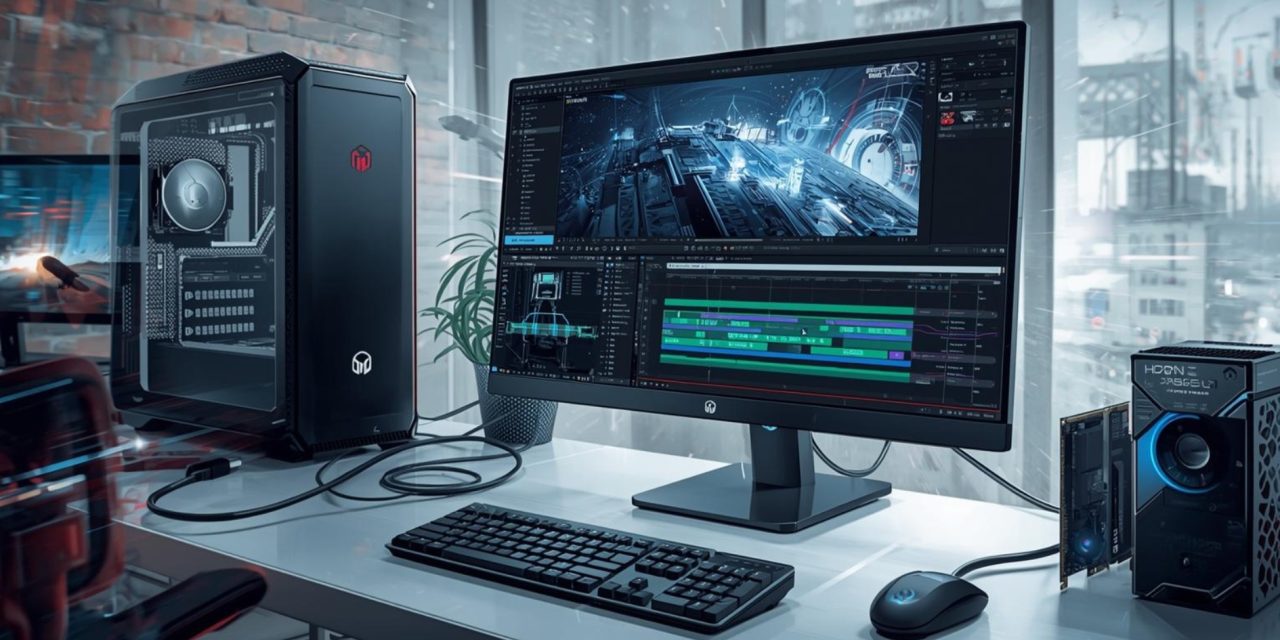
Fast turnarounds in modern content creation are no longer a workflow preference; they are a hardware problem. When 4K timelines stutter, exports crawl, or previews lag behind edits, the issue is rarely the software itself. It’s the machine underneath struggling to keep up, usually in the form of slow storage, underpowered GPUs, or bottlenecked memory.
This article breaks down the core hardware accelerators that now determine how quickly creators can move from capture to publish. From NVMe storage and GPU acceleration to mobile editing rigs and Thunderbolt docks, these components are what make daily uploads, rapid revisions, and same-day delivery realistic rather than aspirational. Speed, at this point, is engineered, not hustled.
Core Hardware Accelerators for Speed
Modern creator rigs now deliver five to ten times faster rendering through NVMe storage and GPU acceleration. Tasks that once took 45 minutes—like exporting a 4K timeline—can now finish in under five. This performance leap is what makes daily content pipelines realistic rather than exhausting.
NVMe drives and GPU acceleration form the backbone of high-speed editing. In real workflows, this means smooth 4K multicam playback in Adobe Premiere Pro or DaVinci Resolve, even with color grading and effects applied. RAID-configured NVMe storage allows creators to scrub timelines without waiting, while GPU-based H.265 exports dramatically shorten delivery time for social platforms.
These accelerators also change how creators plan workdays. Real-time previews in After Effects reduce guesswork in motion graphics, while batch processing and proxy workflows compress long editing sessions into manageable windows. The result is a pipeline that supports consistency, not just peak performance on good days.
Powerful Mobile Editing Rigs
High performance is no longer confined to fixed studio setups. Mobile rigs now rival desktop workstations, allowing creators to edit, grade, and export wherever the shoot ends. Apple’s Mac Studio with M2 Ultra handles 8K multicam timelines at real-time playback, making it ideal for studio-based filmmakers working under tight deadlines.
For creators who move constantly, platforms like the Framework Laptop 16 and the ASUS ProArt series offer serious GPU power in portable form. These systems support RTX-accelerated workflows, enabling real-time playback, fast renders, and accurate color work without returning to the studio. Upgradability also matters here, letting freelancers extend the lifespan of their machines instead of replacing entire systems every cycle.
Paired with external NVMe drives, mobile rigs dramatically reduce turnaround time for short-form content. Editing, grading, and exporting on location means creators can publish while the content is still relevant, not days later.
Compact Laptops with AI-Optimized Chips
AI-optimized chips have quietly become one of the biggest speed multipliers for creators. The M3 Max MacBook Pro, for example, can process AI-assisted edits up to four times faster using its Neural Engine. Tasks like speech-to-text, noise reduction, and auto-cuts that once slowed sessions now happen in seconds.
Windows creators are seeing similar gains from Intel Core Ultra 9 and RTX-powered laptops. These machines excel at batch processing in Photoshop, AI-assisted edits in Premiere, and GPU-heavy rendering in Blender. High memory bandwidth and dedicated AI cores reduce friction across the entire workflow.
The practical impact is endurance. Longer battery life, faster processing, and fewer interruptions allow creators to work sustainably. Speed here isn’t just about export times—it’s about staying productive without creative fatigue.
Thunderbolt Docks for Instant Setup
Thunderbolt docks have become the unsung heroes of fast creator workflows. A single cable now delivers power, storage, displays, and network access in seconds. Devices like the CalDigit TS4 enable creators to connect multiple 4K monitors, NVMe arrays, and high-speed Ethernet almost instantly.
This matters for creators juggling multiple platforms and deadlines. Plug in, resume the same workflow, and export without reconfiguring anything. Thunderbolt docks also simplify team environments, allowing shared storage, calibrated displays, and consistent setups across editing stations.
For live streaming, client reviews, or agency work, docks remove setup friction entirely. Less time connecting gear means more time creating, refining, and delivering content on schedule.
Conclusion
Fast turnarounds are no longer about working harder or cutting quality. They’re about removing bottlenecks at every stage of the pipeline. Modern hardware accelerators—from NVMe storage to AI-optimized chips—compress timelines without compromising output.
For creators publishing daily or managing client schedules, speed isn’t optional. It’s the foundation that keeps creativity sustainable, deadlines realistic, and workflows under control.
How often does your creative momentum die while you’re waiting on renders, exports, or files to sync? DLK Music Pro News spotlights the tools that actually shorten turnaround times for modern creators who can’t afford to wait.