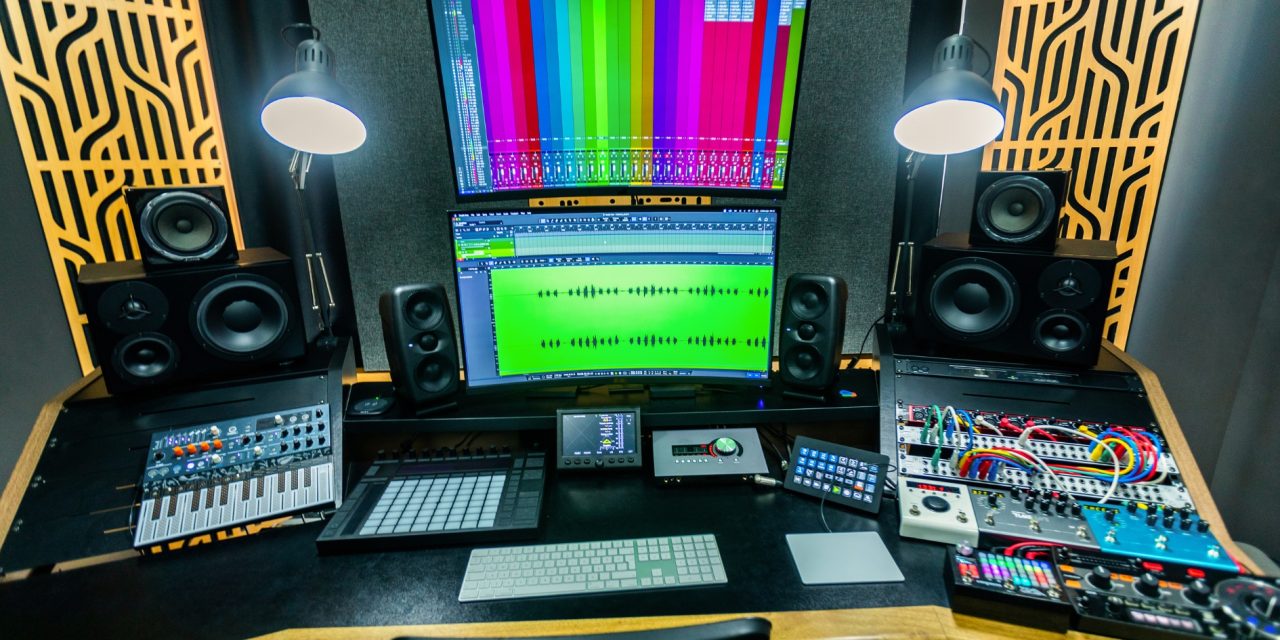
Accurate sound reproduction is the foundation of every reliable mix decision. Monitoring precision depends on three measurable parameters: ±1.5dB frequency response, phase error below 10 degrees, and total harmonic distortion under 0.1% across the full 20Hz–20kHz spectrum. These benchmarks align with AES standards and exist for one reason, ensuring mixes translate consistently across diverse playback systems.
Frequency response governs tonal balance, phase accuracy defines spatial clarity, and low distortion preserves detail under dynamic stress. In digital production environments, where plugins shape sound in real time, monitoring accuracy determines whether problems are revealed or quietly hidden. This technical foundation underpins critical listening, from basic stereo mixes to advanced immersive formats.
Frequency Response Realities
Studio monitors like the Neumann KH 310 deliver a near-flat ±1dB response from 34Hz to 21kHz, while many studio headphones drop sharply below 40Hz. This difference matters when evaluating sub-bass content, reverb tails, and low-frequency energy in kick drums or synths.
Speakers benefit from room gain, naturally boosting bass around 30Hz, while headphones behave closer to anechoic conditions with earlier rolloff. This contrast explains why mixes that sound full on headphones can feel thin in cars or club systems. Nearfield monitors paired with isolation pads help control low-end accuracy without excessive room coloration.
A/B testing reference tracks on both speakers and headphones reveals translation issues quickly. This practice highlights why speakers remain essential for full-range plugin evaluation and low-frequency decision-making.
Phase and Imaging Accuracy
Phase coherence plays a major role in stereo clarity and mono compatibility. Coaxial monitor designs, such as those from Genelec, maintain phase errors below two degrees, preserving phantom center imaging and transient precision. Poor phase alignment can smear delays, widen imaging unnaturally, and cause cancellation issues when summed to mono.
Waveguides and driver alignment help maintain consistent timing between frequencies. A simple mono collapse test quickly reveals phase weaknesses. Accurate monitors retain balance and focus even when stereo width disappears.
Headphones rely on artificial crossfeed to simulate space but lack the natural phase interaction of speaker systems. Polarity checks and pink noise testing remain essential tools, especially for immersive formats like Dolby Atmos or binaural mixes.
Distortion Detection Limits
Low distortion is what allows engineers to hear problems before listeners do. High-end monitors like the Focal Trio6 Be measure distortion as low as 0.0015% at high SPLs, while consumer wireless earbuds can exceed 0.8% at volume. Excess distortion masks compression artifacts, intermodulation distortion, and subtle clipping in mastering chains.
Signal-to-noise ratio and dynamic range further determine how well quiet details survive dense mixes. While planar magnetic headphones approach studio-monitor cleanliness, Bluetooth transmission introduces latency and additional distortion. Wired monitoring with proper impedance matching preserves detail and timing accuracy.
Sine sweep testing at mix-bus levels exposes harmonic buildup and noise floors. Clean reference systems reveal intersample peaks early, ensuring mixes translate across everything from club rigs to laptop speakers.
Conclusion
Accurate sound reproduction is not about luxury gear, it’s about hearing reality. Frequency balance, phase integrity, and low distortion form the foundation of reliable monitoring decisions. When engineers trust what they hear, mixes travel better, translate wider, and hold their emotional impact everywhere they’re played.
When your mix sounds “right,” do you trust your monitoring or just hope it translates? DLK Music Pro News continues the conversation where sound accuracy meets culture, creativity, and purpose.


