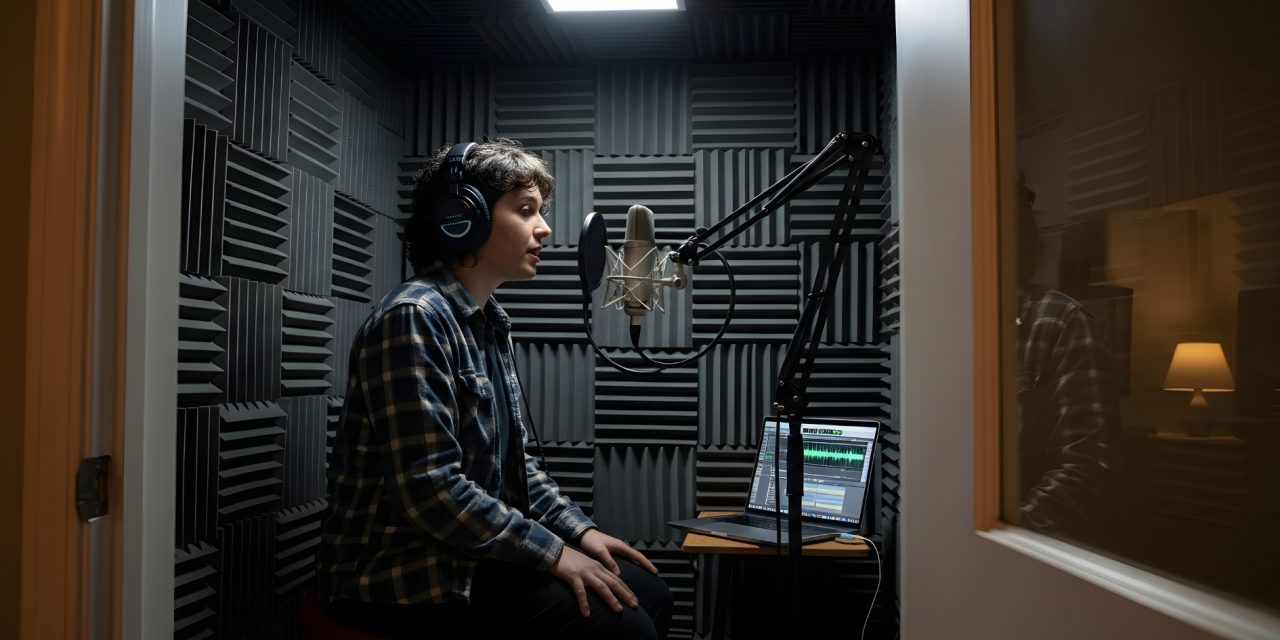
Small rooms have a reputation for being impossible to mix in—but that’s only half true.
The real issue isn’t size, it’s untreated reflections bouncing around like they own the place. With the right approach, even a 64sqft room can go from messy and boxy to controlled and reliable. You don’t need full studio renovations—just smart, targeted acoustic treatment that solves the biggest problems first.
Portable Bass Traps and Diffusers
Low-end buildup is usually the first thing to fix.
In tight spaces, bass frequencies collect in corners and quickly turn your mix into guesswork. That’s why portable bass traps are the starting point—they absorb problematic low frequencies without taking over your room.
Products like the GIK Acoustics 242 Acoustic Panel offer strong absorption while staying compact enough for small setups.
| Product | NRC Rating | Size (inches) | Best For |
| GIK 242 Panel | 0.95 | 24x48x2 | Low-end control |
| Auralex LENRD | 0.62 | 16x16x4 | Corner bass |
| Primacoustic London | 0.80 | 24x48x2 | Midrange clarity |
| ATS Diffuser | 0.55 (scatter) | 24x48x4 | High-frequency diffusion |
| Vicoustic Wavewood | 0.70 | 24x24x2 | Compact diffusion |
Placement matters just as much as the gear itself. Start by identifying first reflection points using the mirror trick—sit at your mix position and mark where you can see your speakers reflected on the walls. That’s where panels should go.
Then move to corners for bass traps, and place diffusers behind your listening position to keep the room sounding natural instead of overly dead.
Corner Fillers That Don’t Eat Space
Corners are where problems hide. But. they’re also where smart treatment makes the biggest difference.
Instead of bulky setups, compact corner solutions can deliver strong results without sacrificing space. Options like the GIK Tri-Trap or ceiling-mounted designs help you treat low frequencies efficiently.
- DIY option: Rigid fiberglass in PVC tubes (budget-friendly, more effort)
- Commercial option: Ready-made traps with consistent performance
- Hybrid option: Decorative solutions that balance function and aesthetics
Installation can stay flexible depending on your space:
- Ceiling suspension for full corner coverage
- Wall-mounted Z-clips for rental-friendly setups
- Freestanding or Velcro-mounted options for easy adjustment
Once installed, measurement tools like Room EQ Wizard (REW) help confirm improvements, especially in smoothing low-end peaks around problem frequencies like 80Hz.
Ceiling Cloud Panels for Apartments
If your walls are treated but your ceiling isn’t, you’re only halfway there.
Vertical reflections between your speakers and ceiling can still blur your mix, especially in small rooms. Ceiling cloud panels solve this without taking up any floor space—perfect for apartment setups.
Options like Auralex Studiofoam clouds reduce reflections significantly while staying lightweight and easy to install.
Quick setup approach:
- Cover the area above your mix position (the “mix triangle”)
- Use 2x4ft panels for balanced coverage
- Hang with chains or eye-bolts for flexibility
Treating roughly 20–25% of your room surface area is often enough to bring RT60 down to a controlled range without over-deadening the space.
Pair this with room correction tools like Sonarworks SoundID Reference for even more accurate monitoring.
Conclusion
Tiny rooms don’t need perfect acoustics—they need smart decisions.
By focusing on key problem areas like corners, first reflections, and ceiling bounce, you can turn a difficult space into a reliable mixing environment. It’s not about covering every surface—it’s about treating the right ones.
With a bit of planning and the right tools, even the smallest setup can deliver mixes you actually trust.
What’s the one spot in your room you already know is messing with your sound—but you’ve been ignoring?
Fix it properly and level up your mixes with DLK Music Pro News.