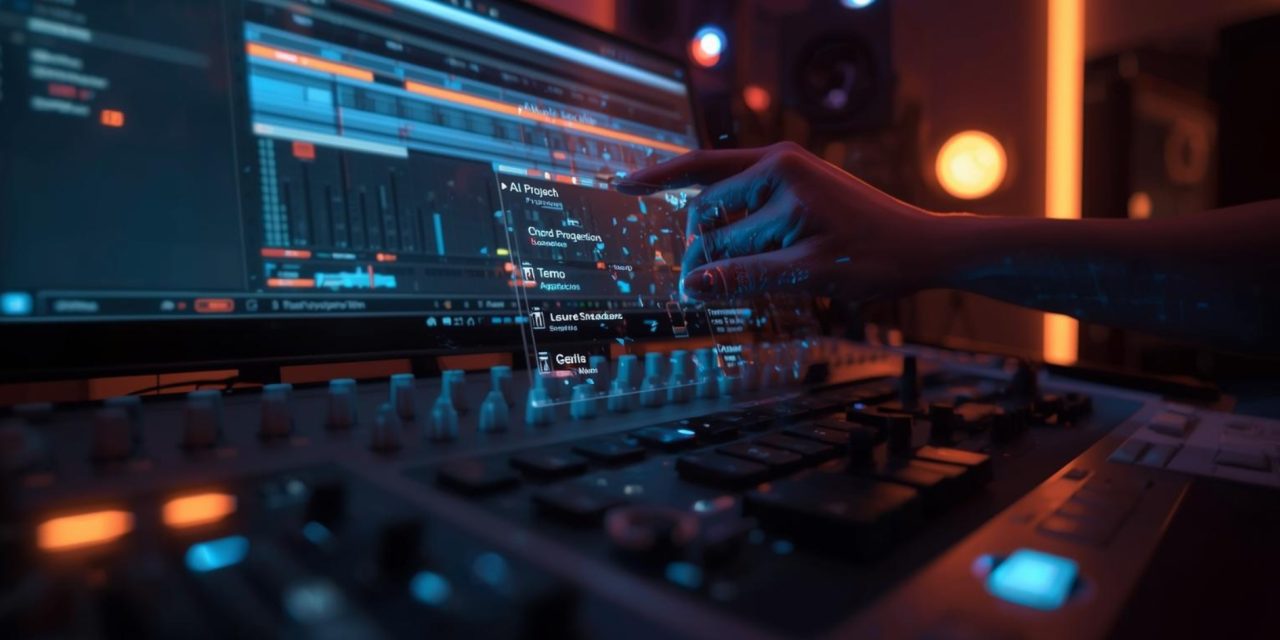
Music production in 2026 is moving fast, mostly because the gear refuses to wait for you. You open a DAW to sketch an idea, and before you finish naming the project file, an AI tool has already suggested chords, a tempo, and a genre you weren’t planning to make today. The modern workflow no longer requires permission; it politely assumes you are ready and proceeds accordingly.
What separates productive producers from overwhelmed ones is not talent, but how well they control this speed. Gear now dictates the capturing, editing, and refinement of ideas, often faster than habits can keep up. When a producer chooses tools poorly, everything feels chaotic. But when they choose well, the workflow feels suspiciously smooth, almost like the software knows what you were about to do next. This article breaks down how modern gear reshapes each core stage of production, from first idea to final polish.
Core Workflow Stages Transformed by Gear
The modern producer workflow relies on tools that bring precision to every phase of production. AI tools accelerate idea generation, immersive capture improves sonic detail, and real-time collaboration platforms eliminate long feedback cycles. Together, these technologies reshape how music is created, edited, and finalized.
Gear choices now directly dictate workflow efficiency. AI-powered concepting shortens pre-production, immersive microphones elevate tracking quality, and neural editing tools speed up revisions. Instead of reacting to problems late in the process, producers now solve them upstream through better equipment decisions.
Industry experts consistently recommend prioritizing DAW integration and low-latency hardware. Hybrid setups that combine plugin ecosystems with hardware controllers allow rapid prototyping without breaking creative flow. The result is a production process that feels intuitive, fast, and far more responsive.
Pre-Production: AI-Assisted Concepting Tools
Pre-production has shifted from a slow exploratory phase into a high-output creative sprint. Tools like AIVA Pro and Orb Composer allow producers to generate dozens of harmonic ideas in minutes instead of hours. What once required manual sketching can now be explored quickly, letting producers compare multiple directions before committing.
The workflow often begins with a simple upload. A vocal stem or melodic idea is analyzed, genre suggestions appear, and MIDI exports are ready in under two minutes. This approach supports algorithmic composition across electronic, pop, and cinematic genres without replacing creative control.
| Tool | Price | Outputs/Min | Best For |
| AIVA Pro | $29/mo | 12 full concepts | Cinematic |
| Orb Composer | $19/mo | 25 progressions | Electronic |
| BandLab SongStarter | Free | 8 song seeds | Pop/R&B |
| Scaler 3 | $59 | 15 scales/modes | Harmony |
Tool selection should match creative intent. Scaler 3 works well for producers focused on harmony and chord movement, while AIVA suits larger compositional structures. When paired with MIDI controllers, these tools encourage fast iteration and experimentation, significantly improving creative flow.
Tracking: Immersive Capture Revolution
Tracking has been transformed by immersive audio technology that prioritizes spatial realism and capture accuracy.
A Neumann TLM 103ii paired with a Sound Devices MixPre-10ii can record binaural 9.1.4 stems at 192kHz/24-bit, enabling instant Dolby Atmos workflows. This level of fidelity was once reserved for specialized studios.
A high-performance gear stack reinforces this capability. Clean microphones capture detail, quality preamps provide gain without noise, and ultra-low-latency interfaces ensure real-time monitoring remains natural. Spatial audio software then translates these recordings into object-based mixes without excessive post-processing.
This approach improves stem quality long before mixing begins. Producers report smoother transitions into spatial workflows because recordings already contain depth and placement. Proper acoustic treatment further enhances results, making immersive capture viable even in smaller spaces.
Editing: Real-Time Neural Collaboration
Editing and mixing are no longer isolated tasks handled by one producer at a time. Real-time collaboration platforms allow multiple producers to work on the same session simultaneously, regardless of location. Tools like SessionWire 2026 enable collaborative editing with minimal latency, making remote sessions feel local.
A structured workflow supports this collaboration. Stems are uploaded to cloud platforms, collaborators join sessions instantly, and AI-driven tools assist with mixing and stem separation. Predictive mixing and neural mastering reduce repetitive revisions and keep momentum high.
These tools also support shared decision-making. Producers can apply compression, EQ, or arrangement changes together while receiving instant feedback. In 2026, editing is no longer a bottleneck, but a collaborative extension of the creative process.
Conclusion
Modern music production workflows are increasingly shaped by gear that emphasizes speed, clarity, and integration. AI-assisted concepting accelerates early creativity, immersive capture improves tracking accuracy, and neural collaboration tools redefine editing efficiency. Each stage benefits from smarter equipment choices that reduce friction and preserve creative intent.
As production continues to evolve, the real advantage lies in selecting tools that work together seamlessly. When gear supports the workflow instead of interrupting it, producers spend less time waiting and more time finishing music.
Are your current tools actively improving your workflow, or are they quietly slowing you down without you noticing? DLK Music Pro News breaks down how modern production gear is redefining efficiency across every stage of music creation.


