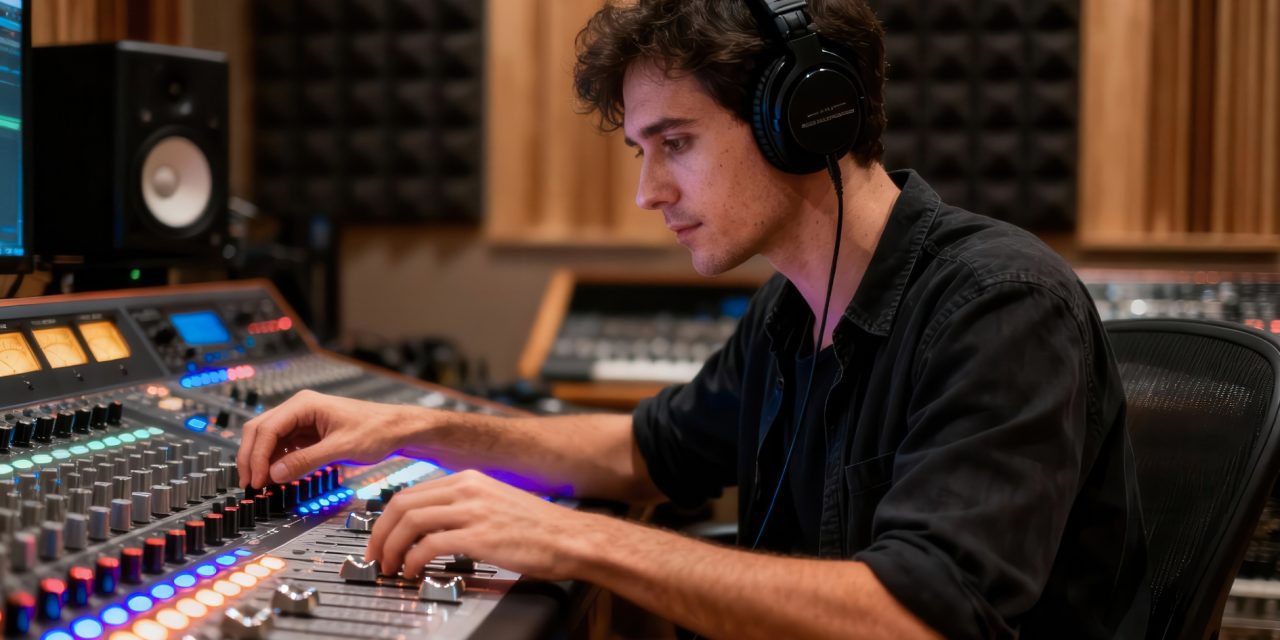
Mixing should feel creative, not mechanical. Yet in a typical 48-track session, producers often spend nearly an hour just managing gain staging and fader rides before any real artistic decisions happen. That invisible time drain slows momentum and dulls creative instinct.
Smart gain staging tools change that equation completely. By eliminating manual level adjustments across entire sessions, producers reduce technical busywork and reclaim hours per project. Instead of chasing peaks, correcting dips, or rewriting automation repeatedly, the focus shifts back to tone, balance, and emotional impact.
The result is faster mixing, fewer revisions, and more consistent outcomes across systems.
Reduced Manual Adjustments
Traditional gain staging can take roughly 40 minutes per session. Intelligent gain modules — such as those found in iZotope Neutron — reduce that process to around 4 minutes through automated analysis and correction. Automation writing drops from nearly half an hour to just a few minutes.
That time savings compounds quickly. Revision passes often shrink from two full checks to one because levels are already optimized before deeper processing begins. Vocals ride more smoothly. Drums hit with controlled impact. Guitars sit naturally in the stereo field.
Applied early in the signal chain, smart gain staging prevents digital clipping and preserves dynamic range before compression or limiting stages even enter the picture. Unity gain remains intact, and mixes translate more reliably across playback systems.
What once felt like maintenance becomes invisible.
Batch Processing Across Entire Sessions
One of the most significant workflow advantages is batch processing. In DAWs like FL Studio and Reaper, multiple tracks can be analyzed and balanced simultaneously in under two minutes.
Instead of adjusting tracks one by one, producers can highlight entire drum buses, vocal stacks, or instrument groups and apply consistent RMS and peak leveling instantly. This removes guesswork from level matching and ensures cohesive gain structure from the start.
Drums feel tighter. Vocals remain forward without overpowering. Instrument layers stay balanced without excessive automation.
Whether mixing music, podcasts, or film audio, optimized gain structure at scale dramatically accelerates the workflow.
Instant Feedback That Prevents Revisions
Real-time loudness monitoring adds another layer of speed. LUFS deviation warnings, peak detection, and A/B reference overlays provide immediate insight during production rather than after export.
Streaming platforms like Spotify and Apple Music normalize loudness, which makes early compliance monitoring critical. Intelligent metering flags compression issues, inter-sample peaks, and gain inconsistencies before they compound later in mastering.
Instead of discovering problems after upload, engineers address them while building the mix.
That shortens feedback loops, reduces client revisions and improves translation.
Conclusion
Mixing speed is not about rushing the process. It is about removing friction.
Smart gain staging eliminates repetitive adjustments. Batch processing ensures session-wide consistency. Real-time loudness feedback prevents downstream problems. Together, these improvements transform mixing from a technical obstacle course into a streamlined creative experience.
The time saved does not lower the quality. It often enhances it. With technical precision handled intelligently, producers can invest more energy into tone shaping, arrangement balance, and emotional impact — the elements that truly define a great mix.
Efficiency becomes creative leverage.
How much faster could you finish your next mix if gain staging took minutes instead of hours?👉 Discover smarter workflow strategies and pro audio breakthroughs at DLK Music Pro News.