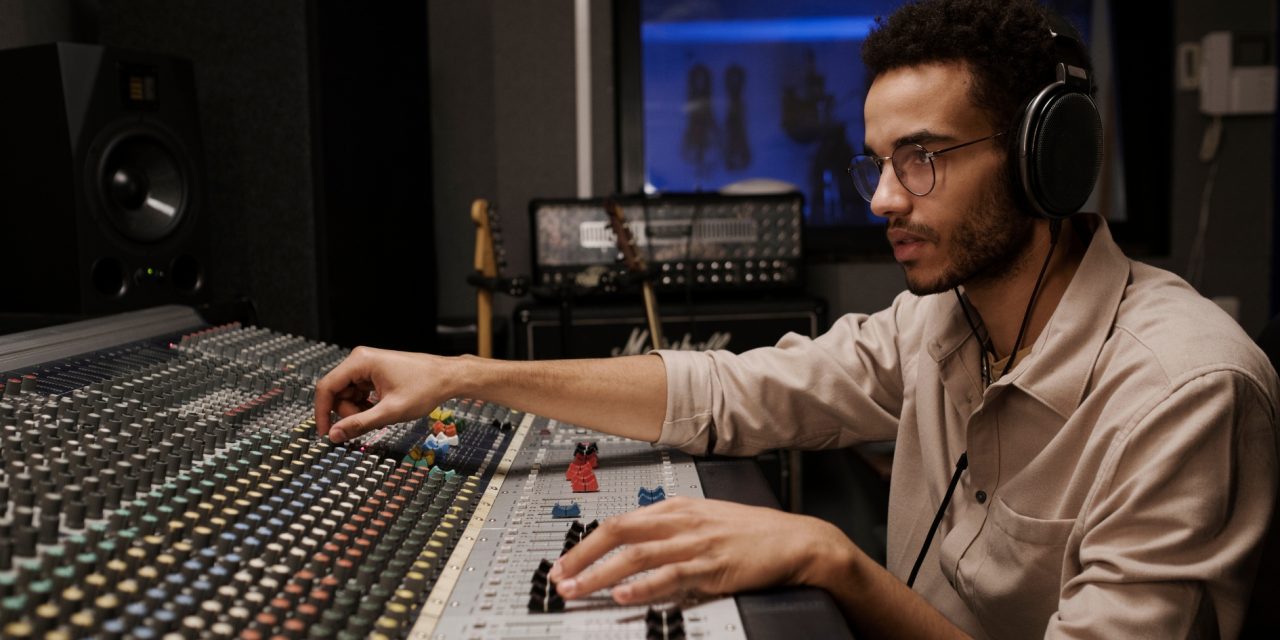
Your mix sounds flawless—until you play it somewhere else. Suddenly the bass vanishes, the vocals feel buried, and your “final” version isn’t so final anymore.
That gap between how it sounds in your studio and how it translates everywhere else is where most mixes fall apart.
In 2026, top engineers don’t rely on one system to get it right. They deliberately switch between speakers and headphones, using each to expose what the other hides.
Because the goal isn’t just a good mix. Rather, it’s a mix that survives the real world.
Hybrid Monitoring Workflows
Modern engineers typically follow a 60/40 split between speakers and headphones. Studio monitors handle spatial accuracy—stereo width, depth, and room interaction—while headphones zoom in on details like clicks, harsh frequencies, and subtle balance issues.
High-end monitors like the Neumann KH 310 provide reliable room-based listening, while headphones such as the Sennheiser HD 650 offer precision without room coloration.
This approach is grounded in psychoacoustics, including principles like the Fletcher-Munson Curve, which explains how we perceive frequencies differently at various volumes. In practice, that means what sounds balanced on speakers might feel completely different on headphones.
A typical workflow starts with speaker calibration, followed by headphone matching, then constant A/B switching. Add low-latency monitoring through your audio interface, and you’ve got a system that adapts to both your room and your ears.
Speaker-to-Headphone Translation
Translation is where most mixes either win or fall apart. What sounds full on speakers can feel thin on headphones—and vice versa.
Engineers often rely on compensation strategies like the Harman Target Curve to align frequency response between systems. This helps reduce differences in bass perception, midrange clarity, and high-end detail.
Reference tracks are essential here. Songs like Peg highlight bass clarity, while Bad Guy exposes vocal presence and low-end balance. Running these through both systems reveals how your mix stacks up.
Small adjustments make a big difference. For example, boosting low frequencies slightly in headphones can simulate speaker bass response, while taming harsh upper mids prevents fatigue. Visual tools like spectrum analyzers help confirm what your ears suspect.
The goal isn’t perfection on one system—it’s consistency across all of them.
Reference Track Calibration
Calibration brings objectivity into a very subjective process. Without it, you’re guessing more than you think.
Engineers often set speakers to a consistent SPL level and match headphone loudness using LUFS targets. Tracks like Come Away With Me provide a balanced reference for tone and dynamics.
A strong reference playlist might also include:
- Aja for stereo imaging
- Everything I Wanted for low-end control
- Get Lucky for groove and dynamics
Pair this with pink noise calibration and proper monitor placement—forming an equilateral triangle at ear level—and your listening environment becomes far more reliable.
Because once your monitoring is consistent, your decisions become repeatable.
A/B Testing Protocols
This is where hybrid monitoring really proves its value. Quick switching between speakers and headphones reveals issues that continuous listening can hide.
A simple method works best: play 15–30 seconds on speakers, switch instantly to headphones, and repeat. Keep volumes matched to avoid being tricked by loudness differences.
Engineers also use blind A/B testing—labeling mixes anonymously to remove bias—and check mono compatibility to catch phase issues early.
Short listening bursts sharpen your perception. You start noticing midrange imbalances, masking, and stereo inconsistencies much faster than during long sessions.
And yes, the final test still matters: export the mix and play it in your car. Reality check included.
Conclusion
Hybrid monitoring isn’t about having more gear—it’s about having more perspective.
Speakers show you the space. Headphones show you the details. Together, they reveal the truth your mix has been hiding.
In 2026, the engineers getting the best results aren’t guessing—they’re constantly cross-checking, calibrating, and refining. Because a mix that works everywhere doesn’t happen by accident. It happens by design.
Have you ever loved your mix in the studio—then heard it somewhere else and instantly knew something was off?
Let us know in the comments—and keep leveling up your ears and workflow only at DLK Music Pro News!