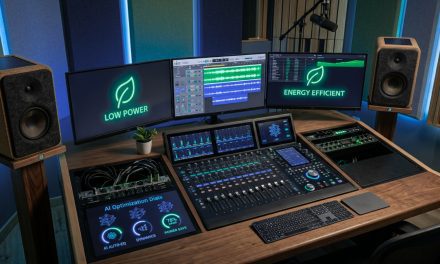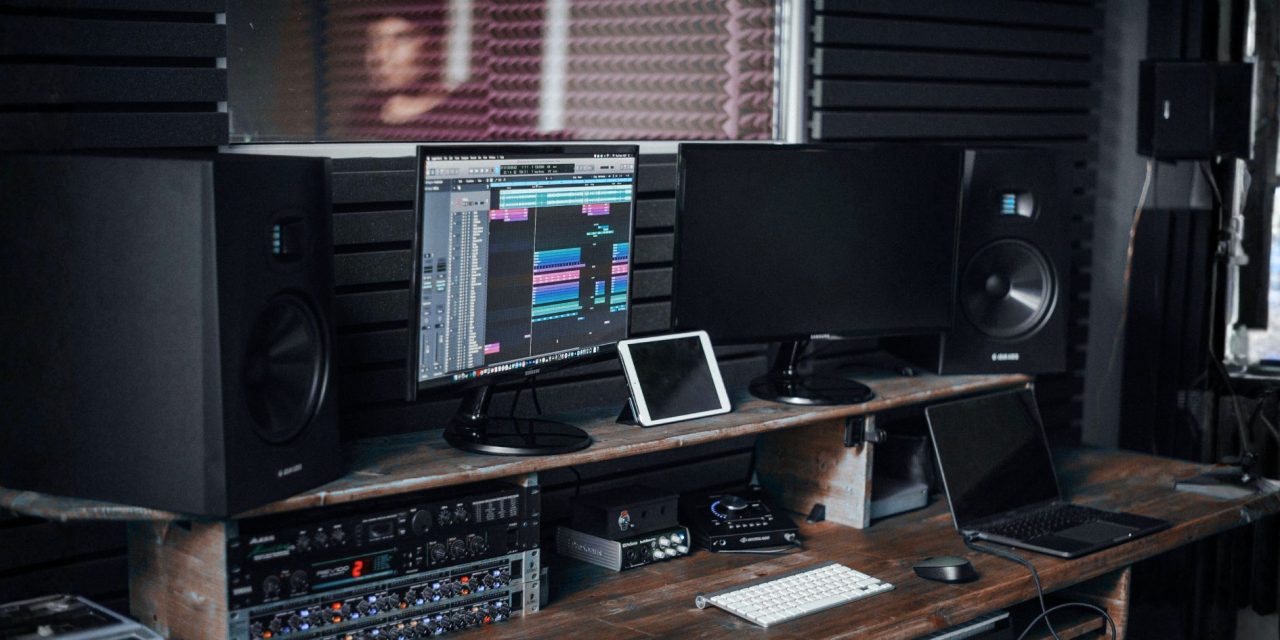
For years, “budget home studio” quietly translated to “please ignore the latency, fan noise, and mysterious crackling during playback.”
Thankfully, 2026 audio interfaces are becoming far smarter than the average studio panic spiral.
With Thunderbolt 5 connectivity, ultra-low latency monitoring, embedded DSP, and AI-assisted optimization, modern interfaces now deliver professional-level recording quality from compact desktop setups. The gap between bedroom studios and commercial rooms is shrinking fast.
Read on to explore how next-generation audio interfaces are changing modern music production.
Evolution from Traditional Designs
The evolution of audio interfaces tells the story of home studios becoming genuinely professional production spaces.
Back in 2015, interfaces like the Focusrite Scarlett 2i2 gave producers affordable recording tools with respectable sound quality, but limitations quickly appeared once sessions became larger or more demanding.
Most USB 2.0 interfaces capped out at 24-bit/96kHz recording, with latency often hovering between 5ms and 10ms. For simple demos, podcasting, or light production work, that was manageable. For heavier mixing sessions or real-time monitoring, it became frustrating quickly.
By 2020, USB-C interfaces pushed performance much further. Devices like the RME Babyface and Universal Audio Apollo improved dynamic range, preamp quality, and DAW integration while lowering latency significantly. Producers could comfortably run larger sessions with better headphone monitoring, cleaner phantom power, and more reliable multi-channel recording.
Now, 2026 interfaces are pushing into entirely different territory. USB4 and Thunderbolt 5 systems support 32-bit/768kHz recording, onboard DSP processing, zero-latency monitoring, and integrated room correction directly inside the interface itself. Home producers can handle immersive audio workflows, high-resolution mixing, and advanced routing setups without needing oversized studio infrastructure.
And honestly, modern interfaces fixing clipping mistakes automatically feels a little like technology politely cleaning up after producers who absolutely ignored gain staging again.
| Era | Connection | Resolution | Dynamic Range | Latency | I/O Example |
| 2015 | USB 2.0 | 24-bit/96kHz | 114dB | 5-10ms | 2-in/2-out |
| 2020 | USB-C | 24-bit/192kHz | 120dB | 2-5ms | 4-in/4-out, MIDI I/O |
| 2026 | USB4/Thunderbolt 5 | 32-bit/768kHz | 130dB+ | <1ms | 8-in/8-out, ADAT expansion |
The improvements go far beyond numbers on spec sheets. Expanded I/O options, cleaner signal paths, better headphone amplification, and integrated DSP now allow smaller home studios to achieve mix accuracy that once required expensive commercial environments.
Why 2026 Marks a Turning Point
What makes 2026 different is not just better hardware. It is how multiple technologies are finally converging at the same time.
Thunderbolt 5 bandwidth now supports massive multichannel sessions with near-instantaneous communication between interfaces, computers, and DSP systems. At the same time, smaller and more efficient chip manufacturing allows interfaces to run advanced processing internally without generating excessive heat or requiring bulky rackmount designs.
AI integration is also becoming genuinely useful inside audio interfaces. Instead of replacing engineers, embedded systems now assist with practical workflow improvements like automatic gain staging, room correction, signal optimization, and low-latency monitoring adjustments. For home producers working in untreated spaces, these features remove a surprising amount of technical friction.
Another major shift involves expansion and scalability. ADAT standardization and improved optical connectivity now make it far easier for producers to grow their setups gradually without replacing entire systems. Smaller desktop studios can scale into larger recording environments while keeping the same workflow intact.
Sustainability is also influencing interface design more heavily than before. Manufacturers are moving toward aluminum chassis construction, energy-efficient DSP systems, and longer firmware support cycles aimed at future-proofing modern studio setups.
| Technology | Impact |
| Thunderbolt 5 | Massive bandwidth for advanced sessions |
| Embedded DSP | Real-time processing and room correction |
| AI Optimization | Automatic gain staging and smart EQ |
| ADAT Expansion | Easier studio scalability |
| 32-bit Processing | Greater headroom and cleaner recording |
| Sustainable Design | More efficient long-term studio hardware |
Industry predictions from events like the AES Convention suggest interfaces will continue moving toward driverless operation, wireless control apps, and increasingly intelligent onboard processing. Home studios are no longer chasing professional studio quality from a distance. They are beginning to operate on the same level.
Conclusion
Next-generation audio interfaces in 2026 are transforming home studios through ultra-low latency monitoring, smarter DSP processing, Thunderbolt 5 connectivity, and dramatically improved audio fidelity. What once required expensive studio infrastructure can now fit comfortably on a desktop setup without sacrificing professional performance.
More importantly, these systems allow producers to focus less on technical limitations and more on actually creating music.
Which advancement matters most to your workflow right now: near-zero latency, onboard DSP, AI-assisted processing, or expanded I/O flexibility?Explore more studio technology breakdowns, production workflow ideas, and modern recording gear discussions at DLK Music Pro News.