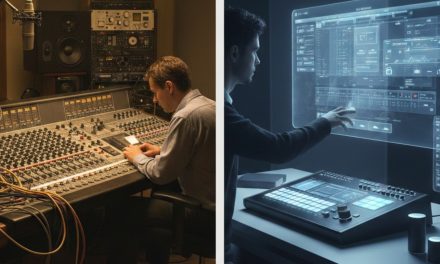
For years, MIDI controllers have asked musicians to adapt to them. Keys were pressed, knobs were turned, and expression stayed politely limited. That arrangement is finally ending.
In 2026, controllers respond, anticipate, and adapt in real time. Advanced sensors, AI intelligence, and modular hardware now push MIDI far beyond simple note triggering. This article explores how MIDI controllers evolved into expressive interfaces and why 2026 marks a defining turning point.
From Basic Controllers to Expressive Interfaces
Originally, MIDI controllers focused on basic communication rather than musical nuance. MIDI 1.0 launched in 1983 to connect hardware efficiently, not expressively. Velocity offered only 128 steps, limiting subtle performance gestures.
The evolution accelerated with MIDI 2.0 in 2018, introducing higher resolution and bidirectional communication. By 2022, the MPE standard gained traction, enabling per-note pitch bend and polyphonic expression. MPE expanded resolution to 16K steps, allowing far finer control.
Hardware followed quickly. The Novation Launchkey 49 evolved into the MPE-enabled Launchkey Hybrid, offering Seaboard-like expression on standard keybeds. This marked a major shift from static note triggers to responsive performance tools.
Traditional controllers like the Novation SL MkIII remain strong for DAW integration with Ableton Live. In fact, it offers faders, knobs, and workflow efficiency but lacks per-note control. By contrast, the ROLI Seaboard Rise 2 uses multitouch surfaces for continuous pitch, pressure, and glide.
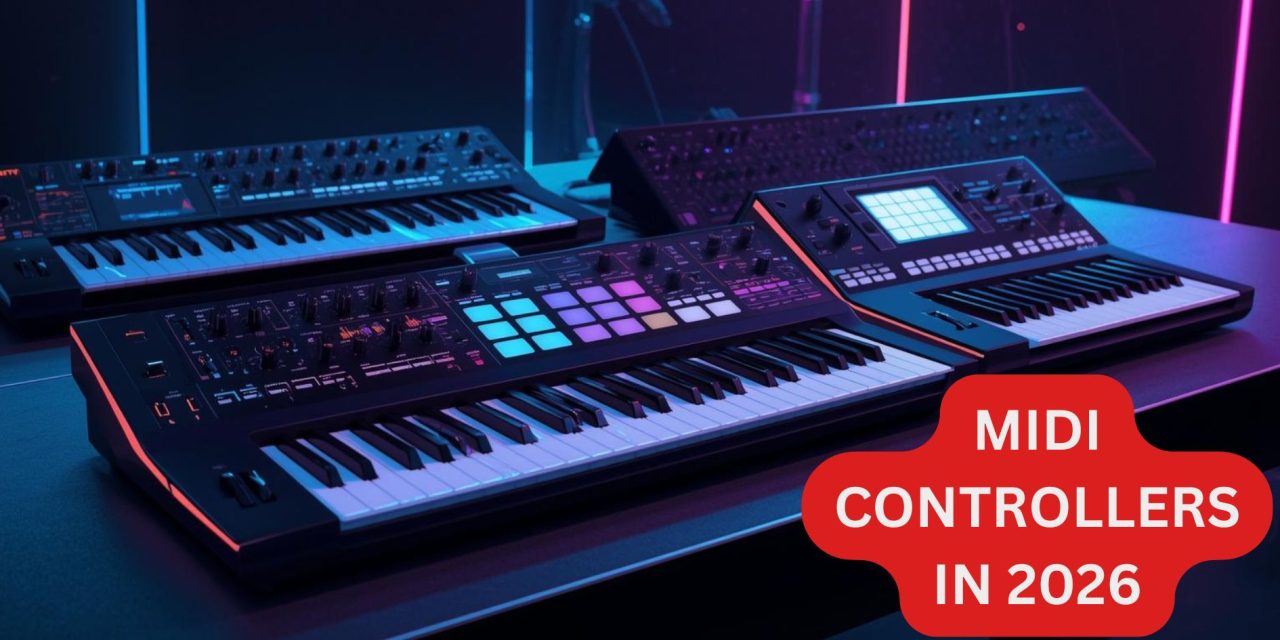
By 2026, expressive tools blend these approaches. Hybrid instruments feature force-sensitive pads, polyphonic aftertouch, tilt sensing, and gesture control. Musicians gain intuitive electronic instruments for both studio workflows and live performance gear.
Why 2026 Marks a Turning Point
The MIDI Association’s 2026 roadmap accelerates this transformation. MIDI 2.0 Property Exchange becomes mandatory for AI controllers and biometric integration. Manufacturers must adopt enhanced standards across hardware and software.
MIDI 2.0 certification also becomes required for USB Audio Class 2.0 devices. The specification highlights 32-bit resolution enabling micro-expressions through pressure sensitivity and gesture data. Controllers now capture nuance previously lost in translation.
Software adoption seals the shift. Logic Pro 12 becomes fully MPE-native, supporting polyphonic aftertouch and multitouch surfaces by default. Users map force-sensitive pads and ribbons directly to virtual instruments.
Ableton Live 13 brings AI mapping with machine learning MIDI features. Predictive mapping and real-time parameter adjustment respond dynamically to performance gestures. Gyroscope and accelerometer data become standard inputs.
Together, these changes show MIDI controllers as intelligent instruments. Studio workflows improve, live performance becomes more expressive, and creative friction drops dramatically by 2026.
Conclusion
The evolution of MIDI controllers reflects a broader shift toward human-centered music technology. Expression no longer requires specialized hardware or technical compromise. AI intelligence, advanced sensors, and MIDI 2.0 standards now work together seamlessly. By 2026, controllers anticipate intent instead of merely receiving commands. This evolution reshapes how musicians perform, compose, and connect with sound across studio and stage.
Has the evolution of MIDI controllers changed how expressive your performances feel in the studio or on stage? Let us know in the comments and stay ahead of MIDI innovation, controller evolution, and production technology only at DLK Music Pro News!