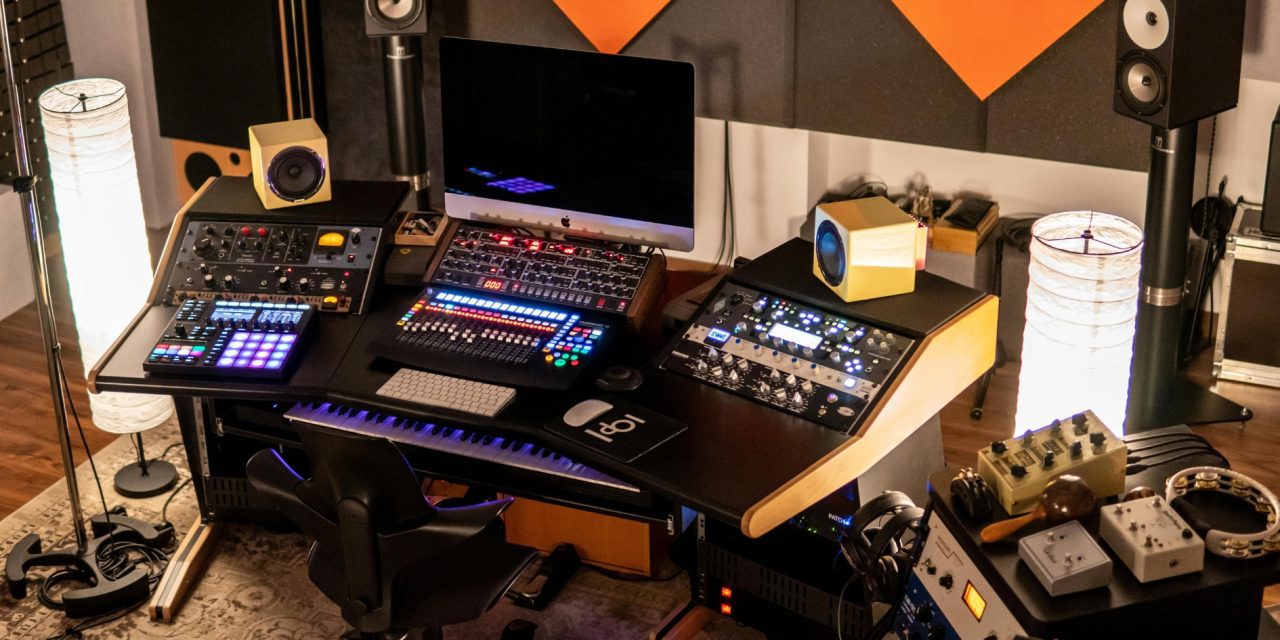
In 2026, processing power isn’t just about your CPU. Rather, it’s about how you shape sound. You can stack plugins all day, but at some point, your system taps out or your mix starts feeling flat.
That’s where outboard gear comes in. While your DAW handles precision, hardware handles character, load distribution, and real-time response. Instead of pushing your computer harder, you offload key processing to dedicated units that add depth, control dynamics, and create space without eating CPU.
Studies from Universal Audio show analog hardware introduces subtle harmonic saturation that plugins still struggle to replicate cleanly. More importantly, it does this without adding strain to your system. That makes outboard gear less about luxury—and more about smart processing strategy.
Core Outboard Tools Every Producer Should Know
Here’s where hardware continues to outperform plugins in real sessions:
Compressors for Dynamic Control
Units like the DBX 286s offer smooth, controlled dynamics without the harshness sometimes introduced by digital compression. On the higher end, the Universal Audio 1176 delivers ultra-fast attack times, making it perfect for drums and aggressive vocals. Meanwhile, the FMR RNC provides transparent buss compression that blends elements naturally.
These compressors respond to audio in a way that feels more fluid, making them reliable tools for both tracking and mixing.
EQs That Add Character
Hardware EQs don’t just shape frequencies, they add tone. The Pultec EQP-1A is famous for its boost-and-cut technique, creating airy highs and tight lows in a single move. The Manley Massive Passive takes this further with rich, musical curves that add depth across the mix.
Even more surgical options like the Rupert Neve 5033 bring clarity while maintaining warmth, especially on vocals and guitars.
Reverb Hardware for Depth
When it comes to space, hardware still holds its ground. Units like the Eventide H9 Max deliver lush, detailed reverbs with impressive dynamic range. The Strymon BigSky excels at vintage-style textures, while Universal Audio UAFX offers compact yet powerful reverb options.
These tools create immersive environments that sit naturally in a mix, making them especially valuable for modern production formats, including spatial audio.
Conclusion
Outboard gear isn’t replacing plugins, it’s elevating them. In 2026, the most effective studios aren’t choosing between analog and digital; they’re combining both to get the best of each.
Hardware brings character, depth, and responsiveness. Plugins bring flexibility and speed. Together, they form a workflow that’s not only powerful but future-proof. And as hybrid setups continue to evolve, outboard gear remains a key part of that equation.
If you could add just one piece of outboard gear to your setup, would it be a compressor, EQ, or reverb unit?
Let us know in the comments and stay locked into essential studio gear insights only at DLK Music Pro News!