Ever looked at your studio and thought, “Why do I need an entire ecosystem just to open a session?” Between cables, racks, and that one device that only works after a restart ritual, it can feel like you’re managing infrastructure instead of making music.
That’s exactly why all-in-one production workstations are starting to gain serious attention.
This isn’t the full deep dive just yet—but it’s a clear look at why 2026 could mark a turning point, as producers begin rethinking how studios are built, scaled, and simplified.
Current Studio Pain Points
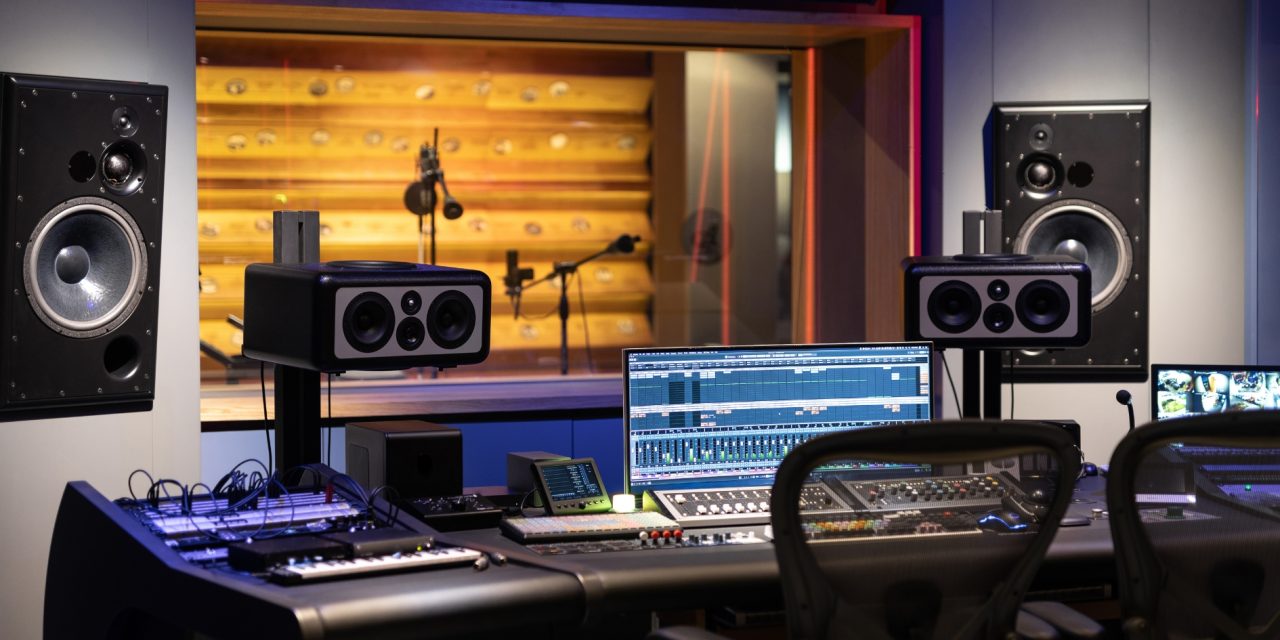
Modern project studios are powerful, but they’re also fragmented. A typical setup can easily include a DAW computer, audio interface, monitors, MIDI controller, storage systems, and power management gear—all competing for space and attention.
That usually means working within roughly 120 sq ft just to keep everything functional, even though the actual creative work often happens at a single desk. It’s not just inefficient—it’s exhausting over time.
The real friction shows up in everyday use:
- Cable overload: 20+ connections quickly turn into a tangled mess that slows troubleshooting
- Power demand: Systems can exceed 1500W, pushing both outlets and electricity bills
- Heat buildup: Stacked gear raises room temperature, forcing additional cooling solutions
- Cost pressure: Hardware alone can exceed $8K, before maintenance and upgrades
Picture a desk buried under XLR, USB, Thunderbolt, and power cables—where even reaching one connection means disturbing five others. It’s a setup that works, but constantly gets in its own way.
Defining All-in-One Production Workstations
All-in-one production workstations aim to eliminate that complexity by integrating everything into a single system.
Instead of multiple devices, these systems combine processing power, audio conversion, DSP, and connectivity into one streamlined unit. That includes high-core CPUs, powerful GPUs, large unified memory pools, built-in preamps, and multi-channel mixing capabilities.
Unlike systems such as the Apple iMac Pro, which can feel limited for demanding production tasks, these newer designs are built specifically with audio workflows in mind. And compared to modular towers like the HP Z8, they remove the need for external interfaces and additional rack gear.
The result is a setup that feels less like assembling parts—and more like using a complete instrument.
Why This Shift Matters in 2026
What makes this transition significant isn’t just convenience—it’s how it changes the way producers think about building studios.
Instead of designing around multiple devices, producers can now center everything around a single system. That shift brings a few clear advantages:
- Space efficiency: Full setups shrink from room-scale to desk-scale
- Energy savings: Consolidated systems reduce overall power consumption
- Workflow simplicity: Fewer devices mean fewer interruptions and faster sessions
- Setup flexibility: Easier to adapt for mobile, home, or hybrid environments
These systems also integrate seamlessly with DAWs like Ableton Live, Logic Pro, and Pro Tools, enabling low-latency recording and real-time processing without the usual complexity.
It’s a shift toward focused, uninterrupted production—which, honestly, is what most setups were trying (and failing) to achieve anyway.
Conclusion
All-in-one production workstations represent a move toward simpler, more intentional studio design.
They don’t just reduce clutter—they reduce friction. And in a creative process where momentum matters, that can make a bigger difference than raw specs alone.
Hardware isn’t disappearing. It’s evolving into something more integrated, more efficient, and more aligned with how producers actually work today. And once you start thinking in that direction, it becomes easier to see why this trend is gaining traction—and why it’s worth watching more closely as the landscape continues to evolve.
If your entire studio could live in one machine, would that simplify your workflow—or make you nervous about relying on a single system? Stay locked into the future of studio design and production workflows with DLK Music Pro News!