The conversation around audio interfaces is changing. Producers are no longer asking only how much an interface costs. They are asking what they actually get for the money.
That question sits at the centre of the audio interface trends 2026 is bringing into focus. Budget interfaces continue serving home studios well, while premium models attract producers who need lower latency, stronger drivers, better connectivity, and more advanced workflows.
Budget vs. Premium: Where Producers Are Drawing the Line
The Behringer UMC204HD, priced around $59, and the RME Babyface Pro, priced around $999, illustrate the enormous gap between budget and premium interfaces.
Budget options provide the essentials many home producers need. They offer microphone inputs, phantom power, MIDI connectivity, and enough I/O for relatively simple recording setups.
Premium models, meanwhile, appeal to producers with more demanding workflows. Better dynamic range, driver stability, DSP processing, and expandability become increasingly valuable when mixing, recording multiple sources, or working with complex sessions.
Discussions on Reddit and Gearspace frequently reflect this divide. Beginners often prioritise affordability and basic functionality, while experienced producers focus more heavily on latency, conversion quality, connectivity, and long-term reliability.
A side-by-side comparison makes the trade-offs easier to understand:
| Metric | Budget (<$200) | Premium (>$500) |
| EIN | Focusrite Scarlett 2i2: 108dBBehringer UMC: 100dB | RME Babyface: 118dBUA Apollo Solo: 120dB |
| Latency | Focusrite Scarlett 2i2: 4.8msBehringer UMC: 7.2ms | RME Babyface: 3.8msUA Apollo Solo: 2.9ms |
| Converters | 24-bit/192kHzBasic AD/DA | High-end AD/DAAdvanced preamps |
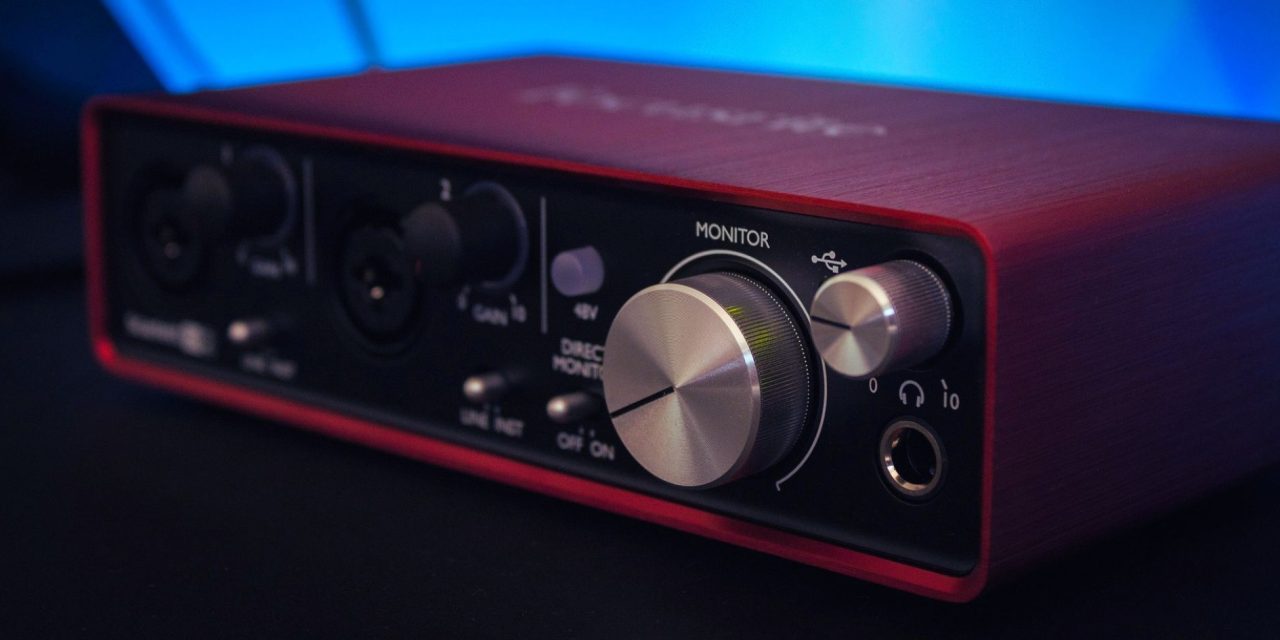
For producers who don’t want to jump straight into premium territory, the Audient iD14 MKII represents a potential middle ground. At around $299, it combines quality preamps, a low noise floor, direct monitoring, and expansion options.
That middle ground is becoming increasingly important. Producers want meaningful improvements without automatically paying four figures for an interface.
Future-Proofing Is Becoming Part of the Decision
The conversation is also moving beyond today’s specifications.
Producers increasingly want interfaces that will remain useful as production workflows evolve. Faster connectivity, stronger DAW integration, expandability, and support for immersive audio all factor into that decision.
Discussions around future audio interfaces frequently mention technologies such as Thunderbolt 5, higher channel counts, spatial audio, and more sophisticated DSP processing.
The appeal is straightforward. Nobody wants to replace an expensive interface simply because its connectivity or software support becomes outdated.
Producers are therefore paying closer attention to features such as:
- Higher sample rates and bit depths for demanding production and mastering workflows.
- Faster connectivity for multi-channel recording and complex studio setups.
- DSP processing for real-time effects and monitoring.
- Spatial-audio support for immersive formats such as Dolby Atmos.
- Strong DAW integration with platforms such as Ableton Live and Pro Tools.
- Long-term driver and firmware support to keep hardware useful for years.
- Expandable I/O for producers whose studios are likely to grow.
RME and MOTU are among the brands frequently associated with long-term reliability and professional connectivity. For many producers, that reliability can matter just as much as another incremental improvement in specifications.
The goal is no longer simply buying the best interface available today. It is buying one that will still make sense several years from now.
What Producers Want Next
The most interesting part of the conversation may be what producers want interfaces to do next.
Low latency remains a major priority, but producers increasingly want that performance without adding more cables and complicated routing. Wireless monitoring, smarter DSP, and more flexible connectivity are becoming recurring themes in discussions about future studio hardware.
Some of the more ambitious ideas include sub-1ms wireless monitoring, AI-assisted mixing features, higher-channel-count connections, automated routing, and increasingly sophisticated spatial-audio control.
Not every idea discussed in producer communities is likely to become a mainstream feature. But together, these requests reveal something important about where expectations are heading.
Producers want interfaces to remove friction.
They want gain staging to be easier, monitoring to feel immediate and routing to become more intuitive. They want their hardware to communicate effortlessly with their DAW, plugins, monitors, headphones, and other studio equipment.
That is a significant shift from simply asking for better converters.
The interface is increasingly becoming the control centre of the modern studio, rather than just the box responsible for getting sound into and out of a computer.
The Sweet Spot May Matter More Than the Price Tag
The budget-versus-premium debate ultimately misses an important point.
Not every producer needs a $1,000 interface. A home producer recording vocals and synthesizers may get everything they need from a well-designed budget model.
Likewise, a professional studio handling complex routing, immersive mixes, multiple recording sources, and demanding monitoring requirements may quickly outgrow entry-level hardware.
The smarter approach is to match the interface to the workflow.
For some producers, that means prioritising affordability and reliable basic I/O. For others, low latency, DSP, expansion, and long-term driver support justify the additional investment.
The most useful audio interface trends 2026 reveals are therefore not really about expensive versus cheap.
They are about value, flexibility, longevity, and fewer obstacles between an idea and the finished track.
The Takeaway
Audio interfaces are becoming more than recording hardware. They are increasingly connected to how producers monitor, mix, collaborate, route, and future-proof their studios.
Budget models will continue making production accessible, while premium interfaces will serve increasingly complex workflows. The interesting space may sit somewhere between the two, where thoughtful features deliver professional benefits without unnecessary expense.
And as producers ask for smarter routing, lower latency, wireless freedom, advanced DSP, and longer hardware lifespans, manufacturers have a clear message to listen to.
If you were buying an audio interface today, would you spend more for premium performance or stick with a budget option that gets the job done? See what producers are choosing next at DLK Music Pro News.