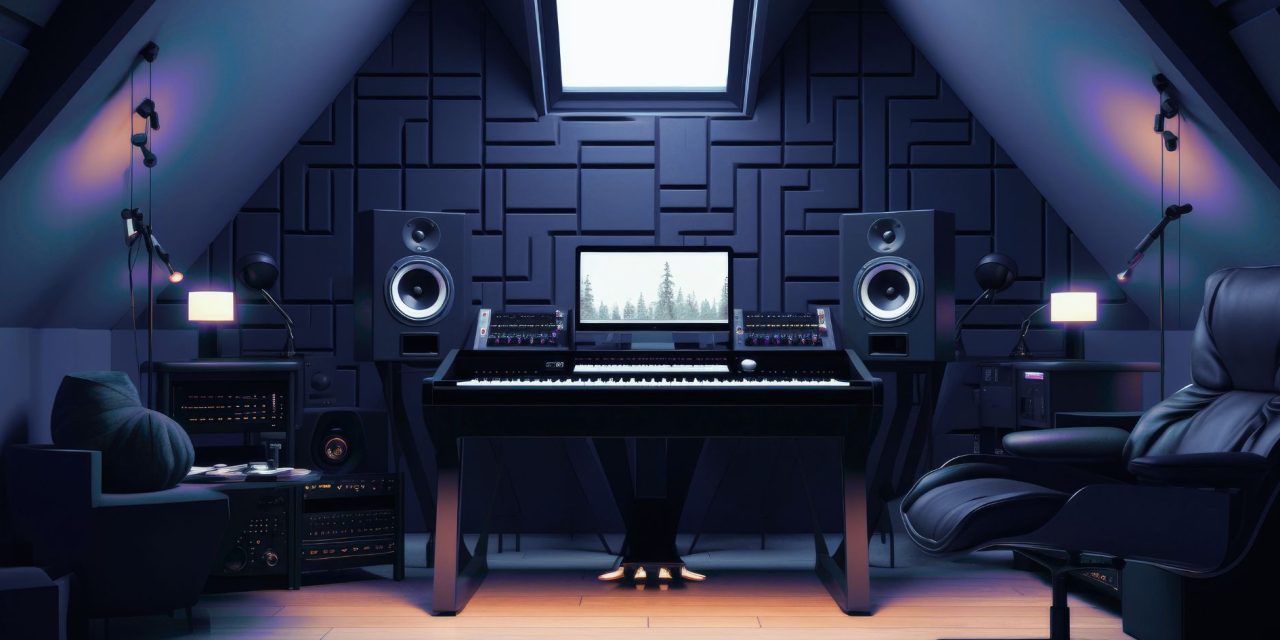
Think you need a massive studio to produce great music? These real-world home studios prove otherwise. With the right gear, thoughtful acoustic treatment, and smart workflow decisions, even the smallest rooms can become surprisingly capable creative spaces.
Three producers transformed challenging spaces into productive studios using carefully chosen equipment and practical acoustic solutions. Instead of waiting for the “perfect room,” they built setups that worked with the space they had, proving that good decisions often matter more than square footage.
From bedroom studios to converted closets, each example demonstrates how strategic gear choices, room treatment, and thoughtful workflow adjustments can lead to professional-quality mixes.
Turning Small Rooms into Serious Studios
One producer transformed a compact 8×10 bedroom into a dedicated mixing and tracking space using Kali Audio monitors, bass traps, and room correction software.
Another converted a closet into a surprisingly effective production room with reference headphones and acoustic treatment. A third optimized a garage corner for immersive Dolby Atmos work using portable equipment and careful speaker placement.
Although each room presented different challenges, they shared similar priorities:
- Controlling unwanted reflections
- Managing low-end buildup
- Improving stereo imaging
- Creating a reliable monitoring environment
The result was greater mix accuracy without requiring expensive commercial studio construction.
8×10 Bedroom Transformation
Inspired by efficient professional studio layouts, one producer transformed an ordinary bedroom into a dependable mixing environment using Kali LP6 monitors, Sonarworks SoundID Reference, bass traps, and isolation pads.
Before treatment, excessive bass buildup and standing waves made accurate decisions difficult. After installing corner bass traps and applying room correction, frequency response became noticeably more balanced, resulting in more confident mixing decisions.
Additional improvements included:
- Kali LP6 nearfield monitors for detailed stereo imaging
- Sonarworks SoundID Reference for room calibration
- GIK Acoustics bass traps to tame low frequencies
- Auralex acoustic panels for reflection control
- Focusrite Scarlett interface for dependable low-latency monitoring
With these relatively affordable upgrades, the producer successfully completed multiple commercial releases entirely from the bedroom studio.
Closet Studios That Produced Professional Results
Perhaps the most surprising example comes from closet studios.
Inspired by compact recording environments used by successful producers, one setup relied primarily on reference headphones, targeted acoustic treatment, and careful room correction to overcome severe space limitations.
Another producer combined compact monitors, a small audio interface, and portable acoustic panels to create an efficient production space capable of delivering polished mixes.
Successful closet studios often shared several characteristics:
- Reference headphones for critical listening
- Compact nearfield monitors where space allowed
- Strategic acoustic panels instead of excessive foam
- Clean cable management and efficient workstation layouts
- Room correction software to compensate for unavoidable limitations
Rather than fighting against the room, these producers learned how to work with it, making smart compromises that preserved mix accuracy.
The Bigger Lesson
These case studies demonstrate an encouraging reality for today’s music producers.
A successful studio is not defined by its size but by how effectively the available space is used. Thoughtful acoustic treatment, accurate monitoring, and efficient workflows consistently produced better results than simply buying more expensive equipment.
As technology continues making professional tools more accessible, small home studios are becoming increasingly capable of producing release-ready music.
For many producers, the biggest breakthrough is not moving into a larger room—it’s learning how to get the very best from the room they already have.
Which small studio upgrade has made the biggest difference to your workflow—or which one is next on your wishlist? Explore more practical studio guides, gear insights, and music production tips at DLK Music Pro News.


