Every producer has imagined it at least once: the giant studio room, glowing racks, absurd speaker systems, and enough gear to make your electricity meter file a complaint. Meanwhile, somebody else is quietly making hits from a bedroom setup balanced between a MIDI keyboard and yesterday’s coffee cup. Modern music production is funny like that.
In 2026, the gap between mobile studios and elite facilities is no longer just about budget. It is about workflow design, creative speed, and knowing which tools genuinely improve output.
A lean $10K hybrid setup can now produce commercially competitive music with shocking efficiency, while $100K facilities push immersive audio, AI-assisted mixing, and high-end collaboration workflows to levels smaller studios still cannot fully match. The real question is no longer “Which setup is better?” but rather “Which setup actually fits the way you create?”
The Rise of the Hybrid Studio Workflow
Modern hybrid studios blur the line between portability and professional production power. Smaller creator-focused setups prioritize flexibility, fast iteration, and mobile creativity, while larger facilities optimize precision, collaboration, and immersive audio environments.
The biggest shift is not simply better gear. It is smarter workflow integration. Producers now combine hardware and software ecosystems in ways that maximize creative flow instead of endlessly expanding equipment lists.
For many independent creators, hybrid workflows mean:
- Faster idea capture during writing sessions
- Lower latency recording and monitoring
- Portable production across multiple locations
- Faster rendering and mix revisions
- More efficient plugin and hardware integration
At the same time, large commercial facilities continue investing heavily in spatial audio systems, AI-assisted mastering, room correction, and high-end analog-digital hybrid chains for premium production work.
Both approaches work. They simply solve different creative problems.
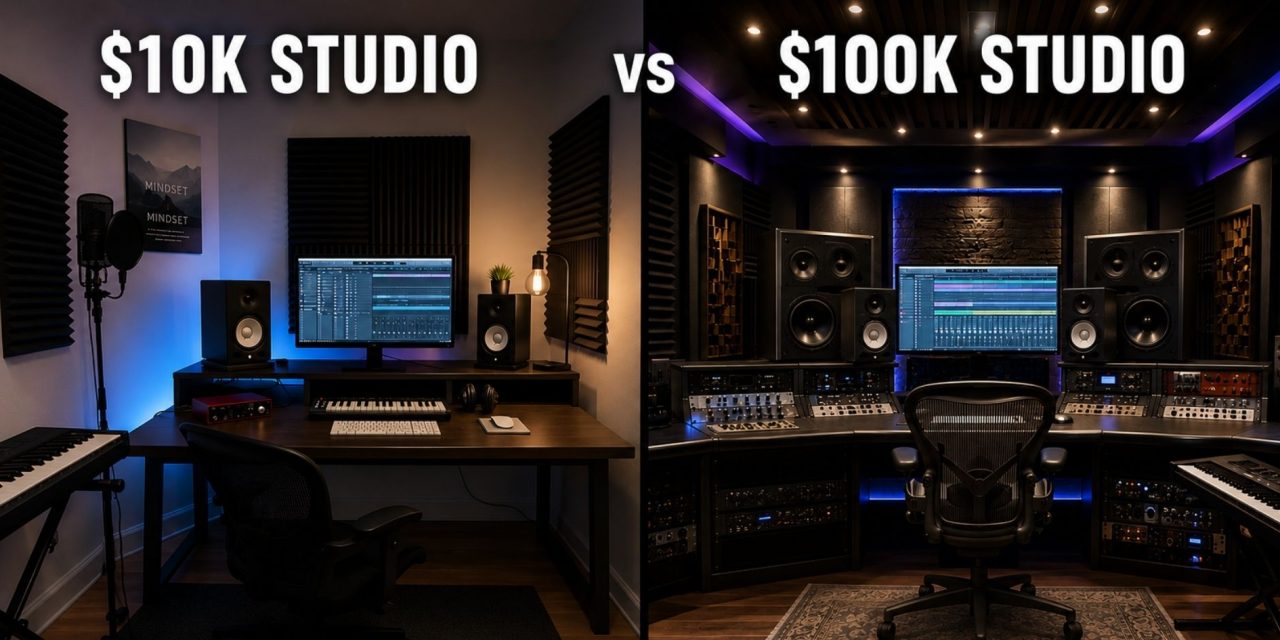
The $10K Mobile Producer Setup
Producer Alex represents the modern mobile creator workflow almost perfectly. His approximately $10K hybrid rig combines portability, speed, and professional-grade audio tools without requiring a massive studio footprint.
Key components include:
- Apple Mac Studio M1 Ultra for fast DAW rendering and multitasking
- RME Babyface Pro FS for near-zero latency recording
- Neumann KH80 monitors for accurate mix translation
- Universal Audio UAD Satellite for plugin processing
- Neural DSP Quad Cortex for realistic amp simulation
This setup reportedly supports around four tracks per week while generating consistent monthly income through beatmaking, mixing, and rapid client revisions.
The workflow advantage comes from mobility and speed. Sessions move quickly because the system avoids unnecessary complexity. Alex can sketch arrangements, track vocals, test sound design ideas, and deliver revisions without waiting on large studio scheduling or lengthy hardware routing setups.
And honestly, that freedom matters more than producers sometimes admit. Inspiration tends to disappear the second a session turns into cable management therapy.
Inside the $100K Professional Facility
At the opposite end sits the large-format professional facility designed for premium commercial production. These studios focus heavily on precision monitoring, immersive audio, advanced collaboration, and high-volume output.
The featured setup includes:
- Holoplot X1 immersive monitoring systems
- SSL BiG SiX hybrid console workflows
- Mac Studio Ultra processing clusters
- Custom-built 9.1.4 spatial audio rooms
This environment supports roughly 12 tracks weekly with significantly higher client rates and stronger mix translation performance. Spatial audio production, Dolby Atmos workflows, stem separation, predictive AI-assisted mixing, and advanced mastering systems all become part of the creative process here.
The biggest difference is not simply sound quality. It is scale.
Large facilities accelerate collaboration between engineers, producers, vocalists, mastering teams, and label representatives simultaneously. AI-assisted workflows further reduce technical bottlenecks while immersive monitoring environments expose details smaller rooms simply cannot reproduce accurately.
Still, diminishing returns become very real past a certain investment point. A $100K studio absolutely expands possibilities, but it does not magically replace songwriting, taste, or emotional connection. Expensive speakers still cannot rescue a boring chorus. The industry has tested this theory extensively already.
Creative Output and Workflow Efficiency
The comparison between both studios reveals something many producers quietly suspect already: smarter workflow choices often matter more than endless upgrades.
| Metric | Mobile Studio | Pro Facility |
| Tracks Per Week | 4 | 12 |
| Hourly Revenue | $127 | $483 |
| Client Satisfaction | 78 | 94 |
| Mix Translation | 87% | 96% |
| Creative Ideas Per Session | 17 | 43 |
The mobile setup thrives on speed, portability, and focused creativity. Constraints sometimes improve productivity because producers spend less time obsessing over endless options.
Meanwhile, the professional facility multiplies output through collaboration, immersive tools, and workflow specialization. Better rooms, advanced monitoring, and larger creative teams naturally increase production depth and scalability.
The key insight is balance.
The future of music production is not purely minimalist or luxury-focused. It is hybrid. Producers increasingly build systems around how they personally create best rather than blindly chasing expensive equipment lists online.
Conclusion
The modern studio landscape proves that creative success no longer depends entirely on owning the largest room or the most expensive hardware. Hybrid workflows now allow mobile producers to compete professionally using compact, efficient setups designed around speed and flexibility.
At the same time, high-end facilities continue pushing boundaries in immersive audio, AI-assisted production, collaboration, and advanced mix translation. Both worlds offer real advantages when matched correctly to the producer’s goals and workflow style.
Because in 2026, the smartest studio is rarely the one with the most gear. It is the one that keeps creativity moving without getting in its own way.
Have you ever looked around your setup and realized the gear you already own might be enough to make the music you have been dreaming about all along?
Stay with DLK Music Pro News for more honest conversations about modern workflows, studio evolution, and the future of music production.