Building a professional studio once required a huge budget and plenty of patience. These days, your bank account can breathe a little easier. Modern gear is delivering professional performance at prices that would have seemed impossible a few years ago.
Affordable hardware is helping bedroom producers achieve studio-quality results without spending a fortune. As technology advances, the gap between home studios and commercial facilities continues to shrink. Independent musicians now have more opportunities to compete with professional productions while working from their own creative spaces.
Affordable Interfaces Bring Pro Studio Quality Home
One of the biggest developments in 2026 is the rise of powerful, affordable audio interfaces.
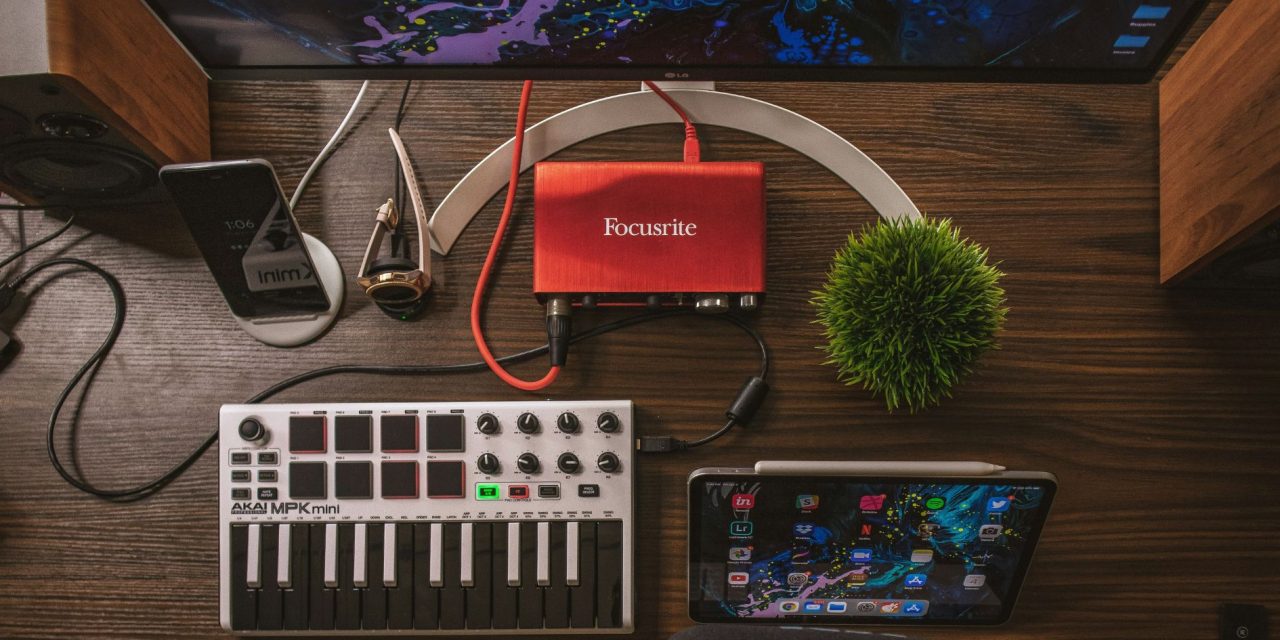
The Focusrite Scarlett 18i20 4th Gen, priced at $749, delivers up to +69dBu gain. That level of performance rivals Heritage Audio racks costing more than $3,000. Independent benchmark testing has also shown that many sub-$500 interfaces now offer impressive fidelity and resolution.
This shift gives producers access to professional sound without major financial barriers. Practical setups often combine these interfaces with USB-C connectivity and low-latency drivers for DAWs such as Ableton Live and Logic Pro. Adding affordable condenser microphones and quality studio monitors creates a scalable setup that can grow alongside a producer’s needs.
Modular Studio Interfaces Under $500
The Audient EVO 16 stands out at $399 with 120dB dynamic range, Air DSP processing, eight microphone preamps, and ADAT expansion. It offers flexibility for producers planning future studio upgrades.
| Model | Price | Key Features | Best For | Pros | Cons |
| Audient EVO 16 | $399 | 8 mic pres, ADAT expansion | Hybrid studios | Expandable | No UAD plugins |
| Focusrite Scarlett 4i4 | $279 | 4 inputs, Air mode | Entry-level professional setups | Low latency | Limited inputs |
| MOTU M4 | $269 | 4×4 I/O, ESS converters | Mid-range studios | High resolution | No DSP |
Choosing the right interface depends on workflow needs. The EVO 16 is ideal for expansion, while the Scarlett 4i4 focuses on simplicity. Paired with quality monitors and headphones, these interfaces deliver accurate monitoring and reliable real-time performance.
Good cable management and thoughtful rackmount solutions also improve workflow efficiency. Small upgrades in organization can make recording sessions smoother and more productive.
Specialized Hardware Expands Creative Possibilities
Affordable interfaces are only part of the story. Silent workstations and portable recording devices are also transforming modern production environments.
The Apple Mac Studio M2 Ultra can handle more than 200 tracks while operating at approximately 22.5dB(A). By comparison, many tower PCs generate significantly more noise during heavy workloads. This makes silent workstations especially valuable for apartment producers and creators working in shared spaces.
| System | Noise Level (dB) | Tracks Handled | Test Method |
| Mac Studio M2 Ultra | 22dB | 200+ | SPL meter at 1 meter |
| i9 PC Tower | 48dB | 150+ | Idle to full load |
| Custom Mini PC | 35dB | 180 | Quiet fan testing |
Quiet systems improve recording conditions while supporting demanding projects. Combined with SSD storage and AI-powered production tools, they help producers work more efficiently without disturbing neighbors.
Portable recording technology is also becoming increasingly accessible. The Zoom F6, priced at $349, offers 32-bit float recording that rivals devices costing several times more. With six XLR inputs, timecode synchronization, battery-powered operation, and extremely low noise performance, it excels in both studio and field recording scenarios.
The device handles unpredictable recording environments with ease. Producers can capture outdoor ambiences, vocals, car interiors, and immersive audio projects without worrying about clipping. Exporting WAV files and pairing the recorder with wireless monitoring creates a highly flexible mobile workflow.
Conclusion
The democratization of music hardware continues to reshape the industry. Affordable interfaces, silent workstations, and portable recorders now deliver professional-level performance to creators at every stage.
What once required a commercial studio budget can now fit into a modest home setup. As innovation drives prices lower and capabilities higher, the path from amateur producer to professional creator becomes far more accessible.
If someone played you two finished mixes—one from a bedroom studio and one from a commercial facility—would you still be able to tell the difference?Stay tuned to DLK Music Pro News as the next generation of production tools continues to blur the lines!