MIDI controllers used to ask one very simple question: “Which note did you press?”
Modern controllers in 2026 are basically asking for a full psychological profile.
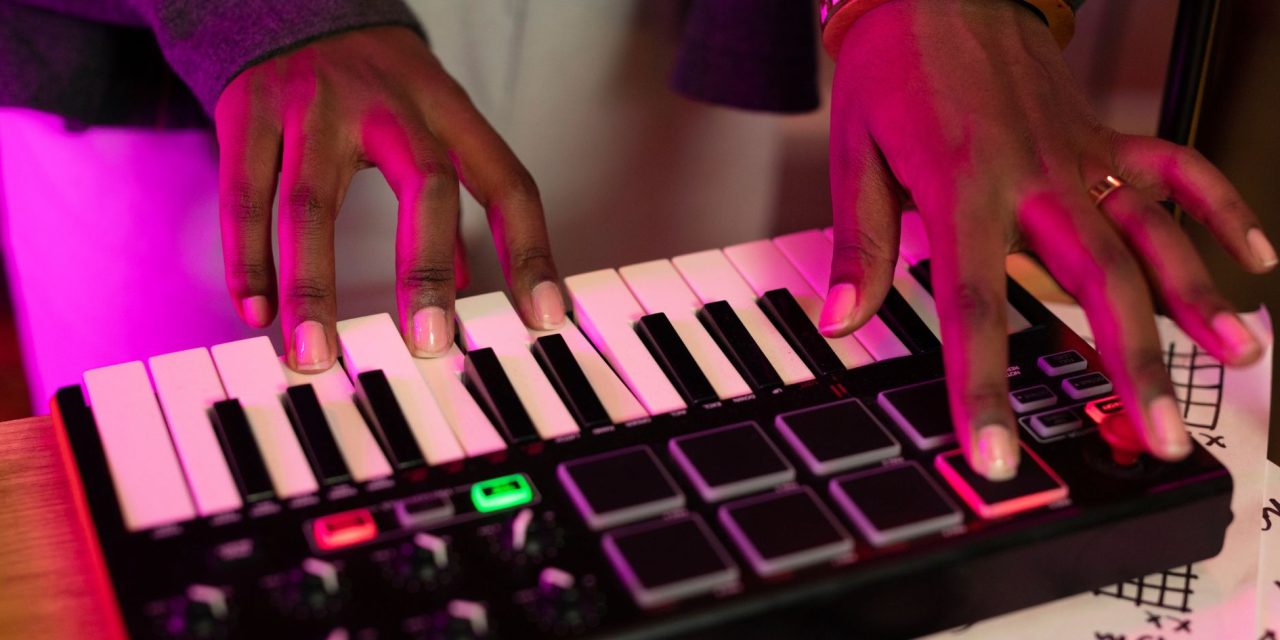
Today’s advanced MIDI hardware tracks pressure, tilt, rotation, motion, finger position, muscle tension, and even brainwave activity simultaneously. Instead of simply triggering notes, modern controllers are evolving into deeply expressive performance systems that blur the line between instrument, interface, and extension of the player’s body.
Read on to explore how sensor fusion, haptic feedback, and biometric control are reshaping the future of MIDI performance and music production.
Sensor Fusion Is Redefining MIDI Expression
Traditional MIDI controllers relied mostly on velocity and aftertouch. Modern systems now integrate five or more sensor types per key or pad, allowing musicians to manipulate sound through movement, pressure, orientation, and gesture all at once.
Sensor fusion combines technologies like:
- Accelerometers
- Gyroscopes
- Pressure mapping
- IMU motion tracking
- EMG muscle detection
- EEG bio-signals
The result feels dramatically more natural during performance.
A producer working inside Ableton Live can now map tilt gestures to filter sweeps, pressure depth to modulation intensity, and hand rotation to spatial effects simultaneously. Instead of clicking automation afterward, performers shape sound physically in real time.
And honestly, we are getting dangerously close to MIDI controllers knowing when producers are emotionally attached to a synth patch they absolutely should have deleted three projects ago.
Haptic Feedback Is Making Controllers Feel Physical Again
One of the biggest developments in modern MIDI hardware is advanced haptic integration.
Companies experimenting with ultrasonic feedback systems and force-sensitive surfaces are creating controllers that simulate physical resistance without moving parts. Pads and keys can now respond dynamically depending on how hard, fast, or aggressively they are played.
Emerging Haptic Applications
| Technology | Function | Performance Benefit |
| Velocity Resistance | Adjusts feel based on playing strength | More expressive dynamics |
| Virtual String Tension | Simulates instrument resistance | Guitar-like synth control |
| Beat-Sync Pulses | Rhythmic tactile feedback | Improved groove timing |
| Ultrasonic Haptics | Mid-air force simulation | Gesture-based interaction |
| Polyphonic Feedback | Individual pad response | Enhanced finger control |
This shift gives performers physical feedback that traditional flat MIDI pads often lacked. Instead of tapping static surfaces, musicians interact with controllers that actively respond to performance energy.
Multi-Dimensional Pressure Sensing Adds New Layers of Control
Modern pressure-sensitive controllers are also becoming far more advanced than simple velocity triggering.
New sensor systems capture movement across multiple axes simultaneously, including:
- X/Y/Z directional force
- Rotational movement
- Surface angle changes
- Pressure depth
- Finger positioning
Multi-Axis MIDI Mapping Examples
| Motion Type | MIDI Application | Example Use |
| Pad Tilt | LFO modulation | Ambient texture shaping |
| Rotation | Filter cutoff | Live synth manipulation |
| Pressure Depth | Velocity scaling | Expressive drum performance |
| Horizontal Motion | Panning control | Spatial movement effects |
| Vertical Pressure | Reverb intensity | Dynamic performance ambience |
Inside DAWs like Logic Pro or Ableton Live, these inputs allow musicians to manipulate multiple parameters naturally through performance gestures instead of relying heavily on automation lanes or mouse editing.
This creates a workflow that feels closer to playing an actual instrument rather than programming one.
Bio-Signal MIDI Control Is Becoming Real
Perhaps the wildest evolution in MIDI technology involves biometric control systems.
Experimental setups now combine EEG headbands and EMG muscle sensors with MIDI mapping systems that translate physical or neurological signals into musical data. Muscle tension can control modulation depth, while alpha wave activity may influence generative sequencing or synth behavior.
Bio-Signal MIDI Applications
| Bio-Signal Type | Function | Musical Application |
| EMG Muscle Data | Detects physical tension | Fader automation |
| EEG Alpha Waves | Measures mental state | Ambient modulation |
| Gesture Recognition | Tracks movement patterns | Live performance control |
| Biometric Mapping | Emotional response shaping | Dynamic synth behavior |
| Predictive AI Mapping | Learns player habits | Adaptive MIDI response |
Latency continues improving rapidly, with some systems operating around 50ms or lower. Combined with machine learning tools, these technologies could eventually create controllers that adapt intelligently to individual performance styles over time.
Which sounds mildly futuristic until you realize producers will absolutely use brain-controlled MIDI to automate reverb tails for three straight hours.
Conclusion
Advanced MIDI controllers in 2026 are pushing far beyond traditional keyboards and drum pads through sensor fusion, haptic feedback, multi-dimensional pressure sensing, and biometric input systems.
These technologies are transforming controllers into highly expressive musical interfaces capable of translating physical movement, touch, and even bio-signals into real-time creative control. The future of MIDI increasingly looks less like programming and more like performance.
MIDI controllers are starting to feel less like gear and more like sci-fi instruments. Which innovation are you most excited to actually use? Dive deeper into modern music technology at DLK Music Pro News.