If your current workstation already sounds fast, 2026 hardware is here to make it feel like it belongs in a museum. Not in a rude way—just in a “wow, things escalated quickly” kind of way.
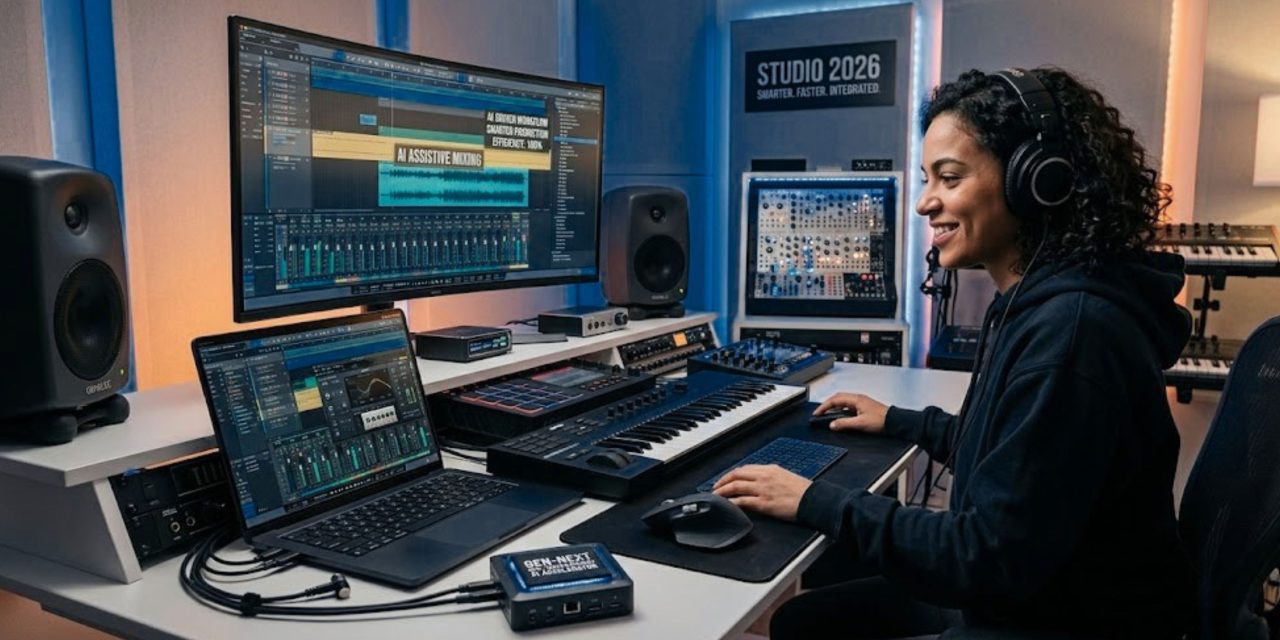
The biggest technological catalysts for 2026 are changing how producers build, mix, and optimize studio workflows. New workstation designs combine CPU, GPU, and AI acceleration into compact, ultra-powerful systems built for real-time music production. For producers, engineers, and beatmakers, this means faster rendering, smoother plugin performance, and significantly more efficient creative sessions.
2026 workstations leverage Intel Lunar Lake, AMD Strix Halo, and NVIDIA RTX 60-series architectures for nearly 10x faster real-time processing. These chip platforms are converging into all-in-one production systems capable of delivering up to 120+ TOPS for demanding audio tasks.
ARM-derived CPUs paired with RDNA GPUs and dedicated NPUs are redefining modern studio setups. This shift supports real-time processing in compact systems, making them ideal for home studios, project studios, and hybrid production environments.
Creative workflows are becoming faster, cleaner, and far less bottlenecked.
The Shift Toward Integrated Studio Workstations
The future is clearly leaning toward integrated systems replacing bulky modular setups.
Instead of relying on separate machines for plugin hosting, virtual instruments, rendering, and AI-assisted tasks, producers are increasingly moving toward powerful all-in-one workstations. These systems combine processing power, storage speed, and intelligent acceleration into one highly optimized environment.
This evolution improves production efficiency while reducing physical studio complexity. For independent producers especially, the appeal is obvious: fewer bottlenecks, cleaner workflows, and better performance in tools like Ableton Live, Pro Tools, Logic Pro, and FL Studio.
Next-Gen CPUs and GPUs
The hardware race in 2026 is centered around processing power and AI acceleration.
Leading processors include:
- Intel Core Ultra 285HX
- AMD Strix Halo
- Apple M5 Max
- NVIDIA Grace CPU
These chips are designed to handle intensive production workloads including orchestral scoring, large plugin chains, AI-assisted mixing, and complex virtual instrument sessions.
| Chip | Cores | TOPS | TDP | Release |
| Intel Lunar Lake | 16 | 45 | 45W | Q1 2026 |
| AMD Strix Halo | 16 | 108 total AI | 350W | Q1 2026 |
| Apple M5 Max | 16 | 38 | 120W | Q1 2026 |
| NVIDIA Grace CPU | 72 ARM | 132 | 500W | Q1 2026 |
AMD Strix Halo stands out with its massive 108 TOPS AI capability, making it especially attractive for demanding workloads like orchestral scoring, film scoring, and immersive audio production.
Intel Lunar Lake, on the other hand, prioritizes efficiency and portability, making it a strong option for mobile production workstations.
Unified Memory Is Changing Workflow Speed
One of the most important technological shifts is the rise of Unified Memory Architecture (UMA).
UMA allows CPU, GPU, and NPU components to access shared memory pools, eliminating traditional PCIe bottlenecks. That means dramatically faster performance when loading sample libraries, running heavy plugins, or processing large sessions.
| Architecture | Max Capacity | Bandwidth |
| UMA | 256GB | 1.5TB/s |
| HBM | 141GB | 5TB/s |
| DDR5-8000 | 128GB | 128GB/s |
The real-world difference is significant.
A 50GB orchestral library loads in approximately 2.3 seconds using UMA, compared to 18 seconds on DDR5-8000 systems.
That speed matters when working with:
- Massive orchestral libraries
- Drum machine collections
- Analog modeling plugins
- Dolby Atmos sessions
- Real-time plugin chains
For producers juggling heavy workloads, UMA delivers serious workflow improvements.
AI-Optimized Accelerators Are Becoming Essential
AI acceleration may be the most disruptive development in music production right now.
2026 NPUs are pushing beyond 120 TOPS, enabling real-time AI-assisted production directly inside DAWs. Tasks that once required external tools or lengthy processing are becoming nearly instantaneous.
Major use cases include:
- Real-time vocal tuning via Antares Auto-Tune
- Stem separation using LALAL.AI
- Auto-mastering via LANDR
- Mix translation through Plugin Alliance
- Virtual monitoring with Waves Nx
Tools like iZotope Neutron and Waves Clarity Vx Pro are already showing what this future looks like.
AI-powered workflows are especially useful for:
- Live sound
- Podcast production
- Remote collaboration
- Mix translation
- Loudness normalization
- Virtual soundcheck
The result is faster turnaround and more intelligent production decisions.
Final Thoughts
The biggest technological catalysts for 2026 are not just about raw speed. They are about smarter, more efficient music production.
Next-generation CPUs, unified memory architectures, and AI accelerators are transforming studio workflows in ways that were difficult to imagine just a few years ago. Producers now have access to systems that deliver incredible processing power in compact, streamlined setups.
For independent creators, beatmakers, and professional engineers alike, the future looks faster, smarter, and far more integrated.
Which 2026 innovation excites you most—next-gen chips, unified memory, or AI-powered production tools?
Let us know in the comments, and stay ahead of the latest music production breakthroughs, studio gear trends, and pro audio insights with DLK Music Pro News.