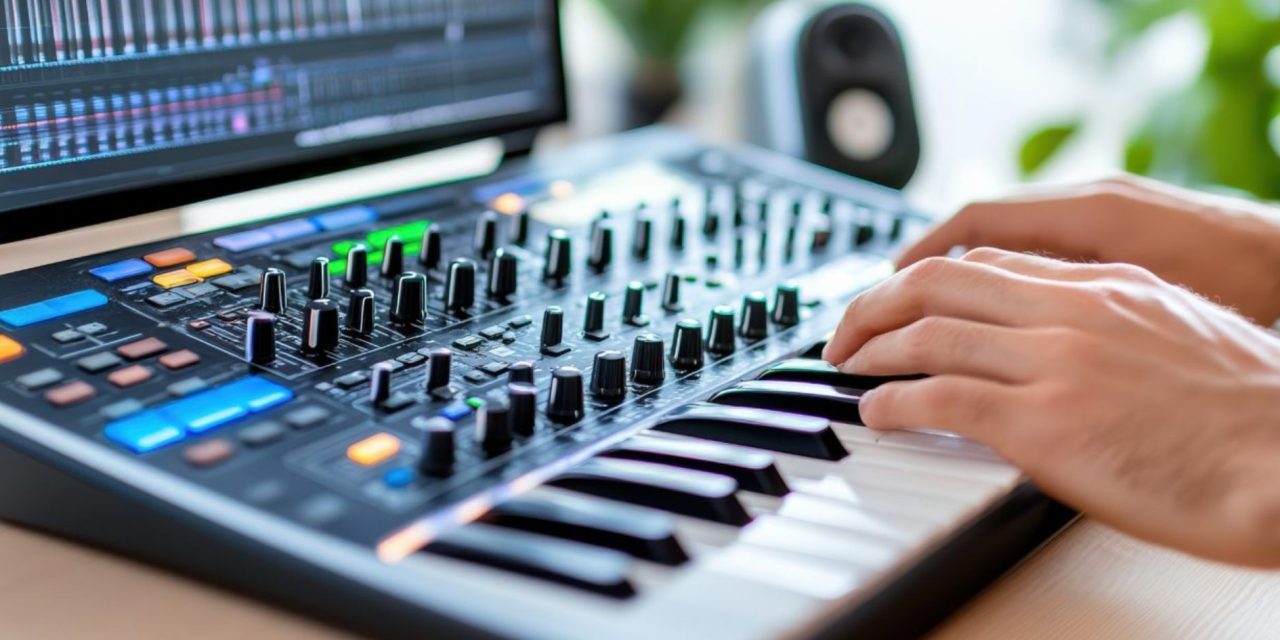
Technology moves fast, but MIDI controllers are finally catching up with the way modern producers actually create music.
Instead of simply adding more knobs and pads, manufacturers are rethinking the hardware itself. Lighter materials, modular components, smarter touch surfaces, and high-resolution displays are transforming controllers into highly customizable creative tools that fit seamlessly into both studio and live workflows.
Smarter Hardware, Smaller Footprints
One of the biggest trends shaping the next generation of MIDI controllers is hardware miniaturization.
Advances in carbon fiber construction, magnesium alloys, and micro-fabrication now allow manufacturers to build controllers that are significantly lighter while packing in more expressive controls. Smaller chassis no longer mean sacrificing functionality. Instead, producers gain denser pad layouts, improved multitouch capabilities, and more responsive performance surfaces.
These improvements work particularly well alongside MIDI 2.0, giving musicians greater precision through polyphonic aftertouch, higher velocity resolution, and enhanced pressure sensitivity.
Modern controllers are becoming smaller, smarter, and considerably more expressive than previous generations.
Modular Designs Put Producers in Control
Rather than forcing every musician into the same workflow, modular controller systems allow producers to build hardware around their individual needs.
Emerging concepts feature interchangeable modules connected through magnetic faceplates and pogo-pin connectors, making it possible to swap components within seconds.
Popular configurations could include:
- Drum pad layouts for beat production
- Keyboard modules with assignable faders
- Mixer-style control surfaces
- Ribbon controllers for expressive performances
Instead of replacing an entire controller every few years, producers simply upgrade or rearrange individual components as their workflow evolves.
Cloud-based firmware updates and customizable software profiles further extend the lifespan of these systems.
Lightweight Materials Improve Long Sessions
Portability is becoming just as important as performance.
Manufacturers are increasingly adopting lightweight materials that reduce fatigue during extended studio sessions and live performances.
| Material | Density (g/cm³) |
| ABS Plastic | 1.80 |
| Carbon Fiber | 1.60 |
| Magnesium Alloy | 1.74 |
Carbon fiber offers one of the best strength-to-weight ratios available, making it an attractive option for next-generation portable controllers.
Combined with improved ergonomics, adjustable viewing angles, and better grip design, these materials help reduce strain during long production sessions without compromising durability.
Integrated Displays Make Workflow Faster
Modern controllers are also becoming far more visual.
Flexible OLED displays and responsive touchscreens now provide instant feedback without constantly looking back at the computer monitor. Instead of guessing parameter assignments, producers can view real-time information directly from the controller itself.
New display technology makes it easier to access:
- Preset thumbnails
- Waveform previews
- Mixer parameters
- Plugin controls
- Gesture visualizers
When paired with DAWs like Ableton Live, Logic Pro, or FL Studio, these displays help streamline workflow by placing essential information exactly where it’s needed.
Conclusion
The future of MIDI hardware isn’t about adding more buttons—it’s about creating smarter, lighter, and more adaptable tools for modern music production.
As modular designs, advanced materials, expressive control surfaces, and integrated displays continue to evolve, tomorrow’s controllers will feel less like accessories and more like true creative partners. For producers looking ahead to the next generation of studio technology, these hardware innovations are worth keeping firmly on the radar.
If you could redesign your dream MIDI controller from scratch, what would you add first—a modular layout, an integrated touchscreen, or completely new performance controls?
Share your ultimate controller wishlist, then explore more music production technology and studio innovation stories on DLK Music Pro News.