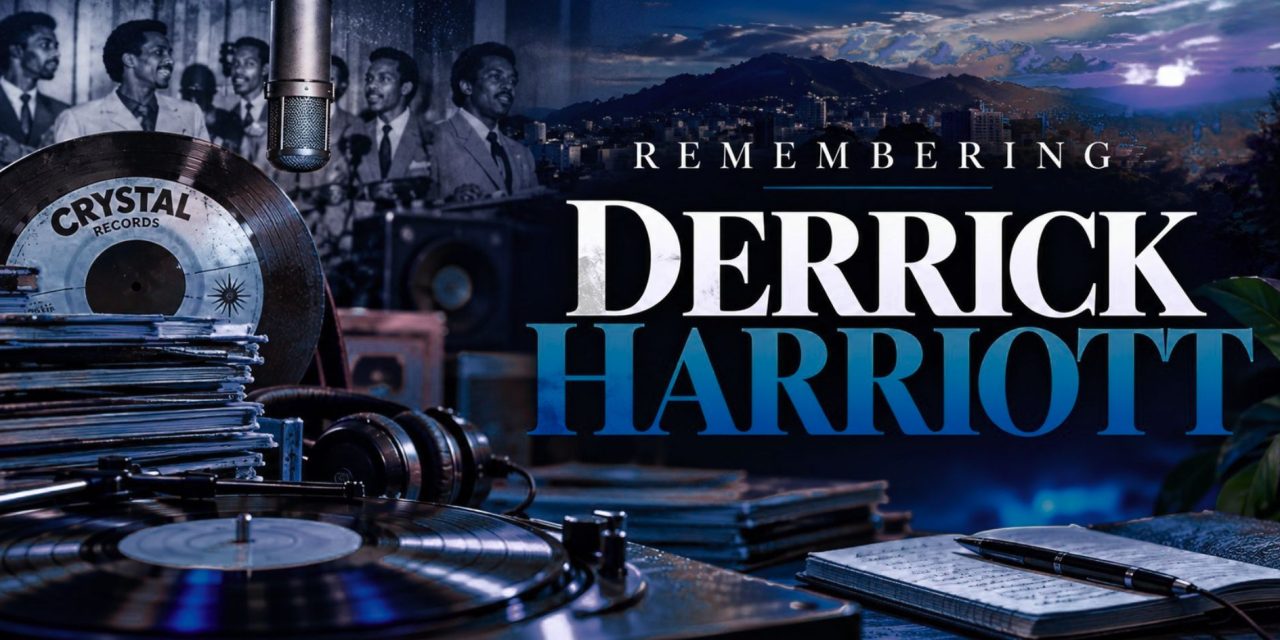
Derrick Harriott, the Jamaican singer, producer and record-label founder whose career crossed ska, rocksteady and reggae, died on October 24, 2026, at age 87. The Jamaica Gleaner confirmed his death through Dorrel Mattocks, operator of Harriott’s music store. The Jamaica Observer separately confirmed it through longtime friend Lorna Thomas. [1, 2]
For producers, remembering Harriott means considering the work surrounding a recording as well as the performance itself. His career brought singing, talent development, a record label and a record shop into one creative life. Together, these roles offer a useful perspective on how producers can help music reach an audience.
An Artist Who Made Room for Other Artists
Harriott emerged with the Jiving Juniors before establishing a solo career. His recordings included “The Loser,” “Walk the Streets” and “Solomon.” He also built Crystal into a home for other performers, including Keith & Tex, the Kingstonians and Dennis Brown. [2]
That distinction matters. A producer’s contribution can be heard in a particular record, but it can also be seen in making the record possible. Recognizing talent, supporting artists and releasing their work can help turn a promising performance into a lasting part of a musical catalog.
Harriott’s work with Crystal demonstrates how a label could provide an outlet for artists beyond its founder’s own recordings. For contemporary producers, the lesson is not to imitate an undocumented recording method. It is to consider what an artist needs beyond a finished mix: clear communication, reliable credits, a realistic release plan and a path toward listeners.
Listening Across Musical Traditions
In a 2015 interview with United Reggae, Harriott discussed how radio and American music shaped his early listening. He named singers including Nat King Cole, Sarah Vaughan and Ella Fitzgerald, alongside blues and rhythm-and-blues influences. His account places those listening experiences within his development as a Jamaican musician. [3]
Producers can take a practical lesson from that history: study influences by listening closely to the music, rather than treating genre as a preset. Consider vocal phrasing, rhythmic emphasis and the relationship between a lead performance and its accompaniment. Comparing recordings can help reveal how different musical choices shape a song’s character.
This approach is a listening exercise, not a claim that Harriott followed a particular production formula. His career belongs to a specific musical culture shaped by artists, musicians and audiences. Understanding that context matters as much as identifying individual sounds.
Keeping Recordings Connected to Listeners
Harriott’s work also extended beyond the studio. The Jamaica Observer documented his long-running record-store business, which served listeners searching for hard-to-find records and other music-related material. [2] The shop connected recordings with people who wanted to discover, collect and revisit them.
For contemporary producers, there is a useful parallel in how music is presented and preserved. Accurate credits, organized catalogs, clearly identified versions and reliable release information help recordings retain their context as they move between platforms and formats. These practices cannot replace the community built around a physical record shop, but they can support a recording’s long-term discoverability.
Harriott’s contribution received public recognition as well. In an October 24 tribute, Jamaican opposition culture spokesperson Nekeisha Burchell highlighted his role in nurturing talent and building the country’s music industry. [4] Her remarks reflect why his legacy deserves attention beyond a list of his own songs.
A Legacy for Producers to Study
Harriott’s career connected three roles: the artist who records, the producer who helps other artists bring music to life, and the entrepreneur who creates ways for that music to reach listeners. Each role involves work that extends beyond the recording itself.
His legacy offers contemporary producers a clear takeaway: support the artist, understand the music’s context and give the finished work a path to its audience. Remembering Harriott means recognizing not only the records he made, but also the opportunities he helped create for others.
What can producers do to support an artist beyond the studio? Explore more stories about music, production and the people shaping the industry at DLK Music Pro.
Sources
[1] The Jamaica Gleaner — “Derrick Harriott, pioneering reggae singer and producer, has died.” October 24, 2026.
[2] The Jamaica Observer — “Derrick Harriott latest Jamaican music stalwart to die in 2026.” October 24, 2026.
[3] United Reggae — “Interview: Derrick Harriott (Part 1).” Angus Taylor, March 18, 2015.
[4] The Jamaica Observer — “Burchell pays tribute to Jamaican music pioneer Derrick Harriott.” October 24, 2026.