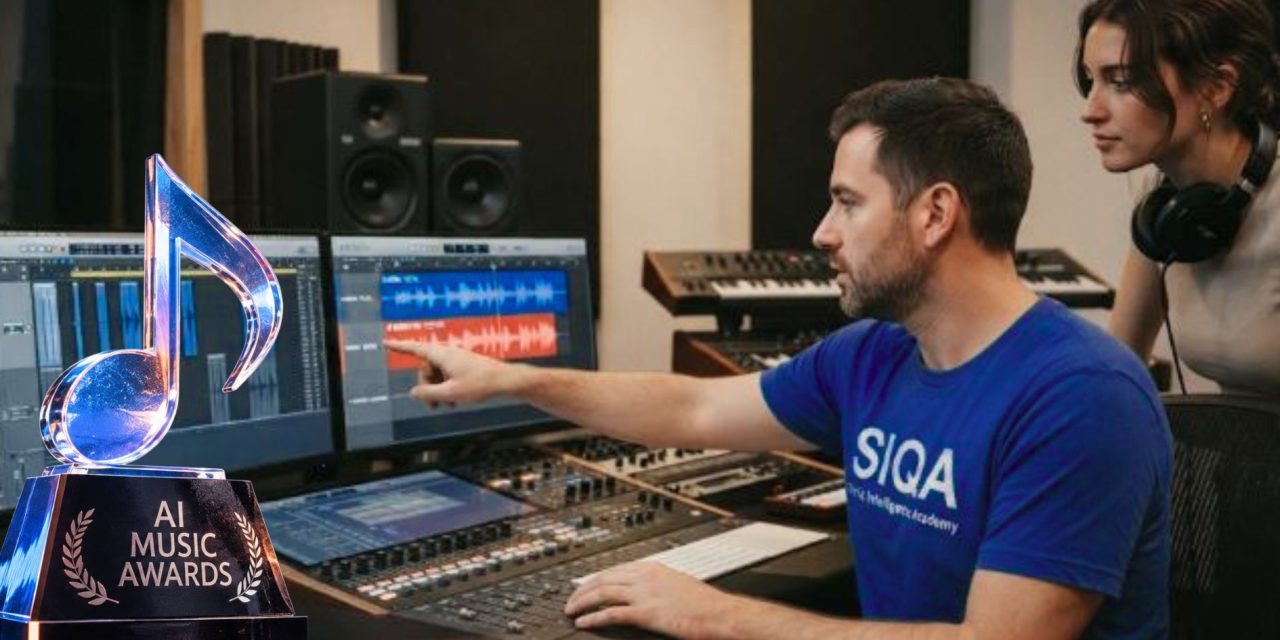
The first AI Music Awards took place November 13 at the Mayan in Los Angeles. Organized by Sonic Intelligence Academy, the event introduced separate awards for Best AI-Assisted Song and Best Human+AI Hybrid Song.
That distinction raises a familiar studio question: how did a tool help create a track, and what actually made it into the recording? Those questions are related, but they are not interchangeable. As Reuters reported, the ceremony celebrated AI music and its creators. The organizer’s published results and categories also show the two classifications side by side.
For producers, this creates a useful opportunity to examine how they document AI involvement. It also highlights three separate responsibilities: disclosing production methods, understanding registry verification and confirming permissions.
Start With the Track, Not the Award Category
Best AI-Assisted Song and Best Human+AI Hybrid Song are classifications within this awards program. Their names alone cannot determine how a particular recording should be classified. Instead, producers should examine the actual contributions behind each track.
Before delivering a mix, ask three questions. What did people create? What did the software contribute? Which generated or processed materials remain in the final recording?
Consider two hypothetical studio sessions.
In the first, a singer records the lead vocal while an engineer uses AI to reduce room noise. The production notes should identify the performer, the engineer’s contribution and the processing applied. They should also distinguish ordinary recording work from AI-assisted processing.
In the second session, a tool generates a vocal texture that the producer chops and places beneath a live lead. Here, the notes should identify the generated source, its musical role and where listeners can hear it.
These examples illustrate different production contributions. They do not automatically assign either recording to an awards category. That distinction matters when describing a track accurately.
Production Disclosure, Registry Verification and Permissions Are Different
Three concepts deserve separate attention when documenting AI-assisted music.
1. Production Disclosure: Explain What Happened
A production disclosure describes how a recording was made. It identifies the human contributions, AI tools and generated materials involved. It should also explain which outputs survived into the delivered recording.
For example, using AI to clean a recorded vocal differs from generating an entirely new vocal texture. Both involve AI, but their contributions to the finished track are different.
2. Registry: Understand What the Program Verifies
The competition points to the SIQA Registry for its own verification process. This connects the awards program with the organizer’s approach to documenting or verifying AI music.
However, a registry entry and a production disclosure answer different questions. The registry relates to the program’s verification process, while production notes describe the actual work behind a recording.
Neither should automatically be treated as proof of every creative contribution or legal right associated with a track.
3. Permissions: Establish What You Are Authorized to Use
Permissions concern the authorization to use material in a recording. Depending on the source, this may involve samples, voices, performances or other contributions.
A production disclosure can identify where material came from. A registry can document participation in a verification process. Neither automatically establishes that the necessary permissions exist.
Producers should therefore retain relevant approvals and permissions separately. If authorization remains uncertain, flag the issue before making unsupported public claims.
Build a Production Record Someone Else Can Follow
A useful production record should be organized by musical parts. Start with the lead vocal, backing vocals, drums, instruments and samples.
For each part, document the following:
- People involved: Identify the performers, producers, engineers and other contributors.
- Starting material: Describe the original recording, sample or other source material.
- AI involvement: Name the tool and explain what it contributed.
- Retained outputs: Identify generated or processed material that appears in the final mix.
- Discarded outputs: Separate auditioned material from anything retained in the recording.
Version control also matters. Give the production notes the same version number as the corresponding mix. This prevents an outdated disclosure from accompanying a newer bounce.
Keep supporting records alongside the session. These can include dated exports, collaborator-confirmed credits and supplied approvals or permissions.
If a source, voice or sample raises unanswered questions, mark it as unresolved. Identify who needs to follow up rather than assuming everything is cleared.
Public-facing credits should contain only details you can substantiate and have permission to share.
What Is Confirmed, and What Should Producers Test?
The published awards categories confirm that the program distinguishes Best AI-Assisted Song from Best Human+AI Hybrid Song. The organizer also identifies the SIQA Registry as part of its verification process.
However, the category names alone do not establish how every submitted track qualifies. They also do not establish the permissions behind individual recordings.
Producers can test their own documentation by asking someone unfamiliar with the session to review it. Can that person identify the lead performer, locate generated audio and understand the tools involved?
They should also be able to distinguish retained material from discarded experiments. Any outstanding permissions or source questions should be clearly marked.
This simple review reveals whether the production record communicates what actually happened.
Better Documentation Protects the Creative Story
AI-assisted production introduces new questions, but accurate documentation remains a familiar professional responsibility. Producers need to explain their creative decisions without confusing tool usage, registry participation and permissions.
The first AI Music Awards bring these questions into sharper focus. Their separate classifications encourage closer attention to how human creativity and AI tools contribute to finished recordings.
Ultimately, a track deserves more than a label. It deserves an accurate account of the people, decisions and creative work behind its sound.
When a recording blends human performance and generated sound, can listeners still trace the creative fingerprints behind it? Explore the production technologies, industry developments and changing creative responsibilities shaping modern music on DLK Music Pro News.