Every producer knows the feeling. You open another plugin, scroll through endless presets, tweak a few virtual knobs with your mouse, and suddenly half an hour has disappeared. Sometimes the fastest way to make music is to stop clicking and start turning real knobs.
That is why hardware music production continues to thrive. While software grows more powerful every year, many producers still reach for synthesizers, controllers, and outboard gear that offer immediate control, dependable performance, and a sound that feels uniquely alive. Hardware may not replace plugins entirely, but it continues to offer advantages that keep it firmly at the center of countless modern studios.
Why Hardware Still Matters
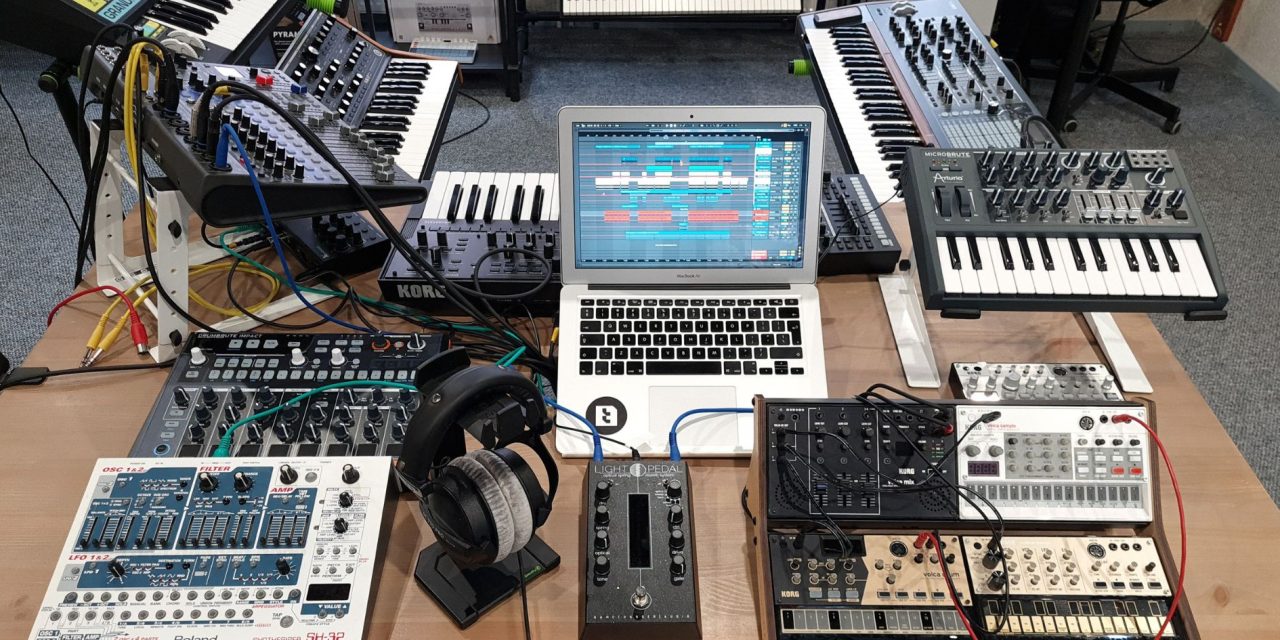
The Arturia MiniFreak is a perfect example of why hardware refuses to disappear. Priced around $599, this desktop synthesizer delivers hands-on sound design through dedicated knobs, sliders, and intuitive controls that encourage experimentation rather than menu diving.
That tactile workflow remains one of hardware’s biggest strengths. According to a 2024 MusicRadar survey, 87% of producers ranked analog warmth as the main reason they continue investing in hardware. Rather than relying solely on software emulations, many musicians prefer the subtle imperfections and character that real analog circuitry naturally produces.
Analog hardware typically generates total harmonic distortion (THD) between 0.1% and 1%, creating the warmth and saturation that countless plugins attempt to recreate. While modern software does an impressive job, many producers still find hardware more inspiring during the creative process.
Proper gain staging also helps bridge hardware with modern DAWs. Sending hardware synths into an audio interface at roughly -12 dBFS before recording provides plenty of headroom while reducing clipping throughout the signal chain.
Perhaps most importantly, hardware tends to age far more gracefully. Many synthesizers remain studio staples for well over 15 years, while software often requires upgrades or becomes incompatible after only a few years. For producers thinking long term, hardware remains one of the most future-proof investments available.
Tactile Control That Keeps Creativity Flowing
Few things interrupt creativity faster than endless clicking. Hardware offers an experience that feels immediate, allowing producers to shape sounds in real time without constantly looking at a screen.
The ASM Hydrasynth demonstrates this perfectly. Featuring 22 endless encoders, it gives producers direct access to sound-shaping controls without relying on a handful of assignable macros. Instead of navigating multiple plugin pages, adjustments become quick, intuitive, and far more musical.
Other standout examples include:
- ASM Hydrasynth – 22 endless encoders provide extensive control over wavetable synthesis.
- Arturia KeyStep Pro – Polyphonic aftertouch and expressive MIDI performance make it ideal for sequencing and live playing.
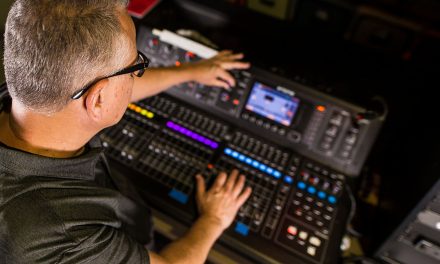
- Behringer Wing – Motorized faders deliver smooth automation and hands-on mixing during studio sessions and live performances.
Reliability is another area where hardware continues to shine. Unlike software, dedicated hardware does not suddenly freeze because an operating system decided today was the perfect time for an update. Producers performing live especially appreciate this stability, and artists like Richie Hawtin have long demonstrated how dependable hardware can be in demanding performance environments.
Combining hardware with modern DAWs creates an efficient hybrid workflow. MIDI controllers, synthesizers, and sequencers work alongside software instruments, giving producers the flexibility of digital production without sacrificing the creative advantages of physical control.
Final Thoughts
Software continues to evolve at an incredible pace, but hardware remains an essential part of music production for good reason. From analog warmth and dependable reliability to tactile creativity and long-term value, physical gear still offers benefits that plugins simply cannot replicate completely.
The strongest modern studios often combine both worlds, using hardware for inspiration and performance while relying on software for editing, mixing, and finishing touches. Rather than competing, they complement one another, giving producers the best of both creative approaches.
Which piece of hardware has made the biggest difference in your music production workflow?
Share your experience in the comments, and keep discovering more professional production tips, studio gear insights, and music technology updates with DLK Music Pro News!