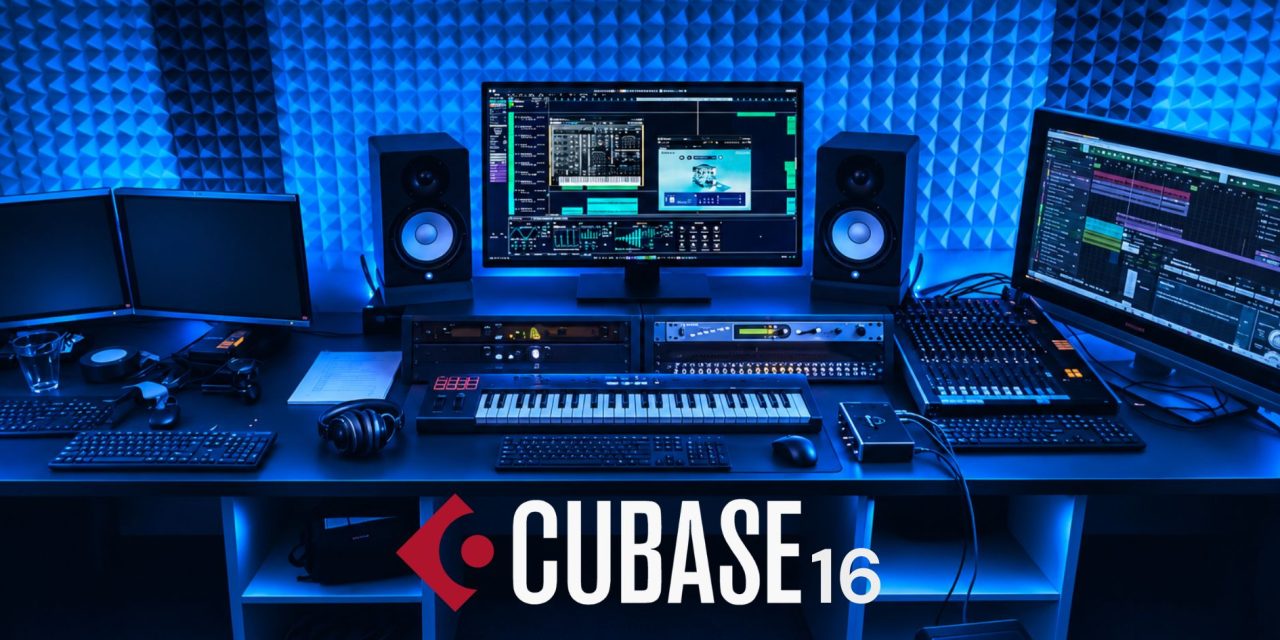
Steinberg released Cubase 16 on November 4, 2026, introducing new instrument-layering tools and improvements to editing and everyday configuration. For established studios, the important question is which changes improve existing workflows and which compatibility checks should come first.
The manufacturer’s announcement highlights workflow refinements alongside creative additions. KVR’s November 4 coverage independently confirms the release across Pro, Artist and Elements editions.
However, Steinberg’s detailed Pro release notes do not mean every feature is available across all three editions. Producers should check their edition before planning around specific additions.
Instrument Stacks Make Layering a Distinct Workflow
According to the Cubase 16 release notes, Instrument Stacks combine multiple VST instruments, Sampler Tracks and Drum Tracks into one playable track.
Each layer can have its own key and velocity ranges, transposition and settings. Producers can also save complete stacks for use in other projects.
This creates a convenient starting point for sounds requiring coordinated layers. Examples include a pad behind a piano, a restricted bass layer or textures responding differently to playing intensity.
However, a convenient container does not automatically improve the musical result. Producers should still evaluate combined levels and determine whether every layer contributes something useful.
MIDI and Audio Editing Gain Different Kinds of Control
The Key Editor introduces Strum for adjusting timing across programmed chords. Stretch Selection expands or compresses MIDI passages without changing the project tempo.
Cubase 16 also introduces new Spectral AudioWarp modes for additional time-stretching and pitch-shifting options.
These tools support different creative decisions. A strummed chord might need to follow a groove, while stretching a phrase could support an arrangement change. More extreme audio warping may serve a sound-design purpose.
Keep an unprocessed version available when experimenting. This makes it easier to judge each change against its original musical purpose.
Steinberg also lists six stem-separation categories: vocals, drums, bass, piano, guitar and other instruments. Producers should evaluate separation quality using their actual source material.
Stem separation is an editing capability, not permission to reuse someone else’s recording.
Searchable Settings Address a Familiar Interruption
The redesigned Settings workspace introduces a searchable, non-modal interface for configuration. Steinberg also highlights improvements to Tempo Detection.
The launch discussion identifies finding settings and reducing repeated setup steps as important workflow priorities.
For an existing template, start by locating the audio connections, project setup and key commands used regularly. Confirm familiar operations before introducing new instruments or changing several production variables simultaneously.
Check Sonnox Compatibility Before Upgrading
Sonnox’s November 4 compatibility notice reports unstable FFT spectrum displays in Claro and Oxford Dynamic EQ. The issue affects Cubase 16 running on later macOS versions.
At the time of the notice, Sonnox had not identified problems with audio processing, session compatibility, presets or licensing.
The investigation remained open, with no permanent workaround identified. Sonnox suggested continuing with Cubase 15, where the affected plug-ins had been verified to operate correctly.
This is a specific display issue, not evidence that every Sonnox product or Cubase system is affected.
Before moving an active delivery project, check current support notices and confirm edition-specific features. Test a saved project copy using the plug-ins and hardware the session actually requires.
Reopen the project, inspect automation and routing, and compare a reference export. Cubase 16 introduces substantial creative possibilities, but a controlled evaluation helps establish which improvements belong in the next production.
Which Cubase 16 additions could genuinely improve your existing production workflow? Explore more software releases, studio developments and practical production updates at DLK Music Pro News.