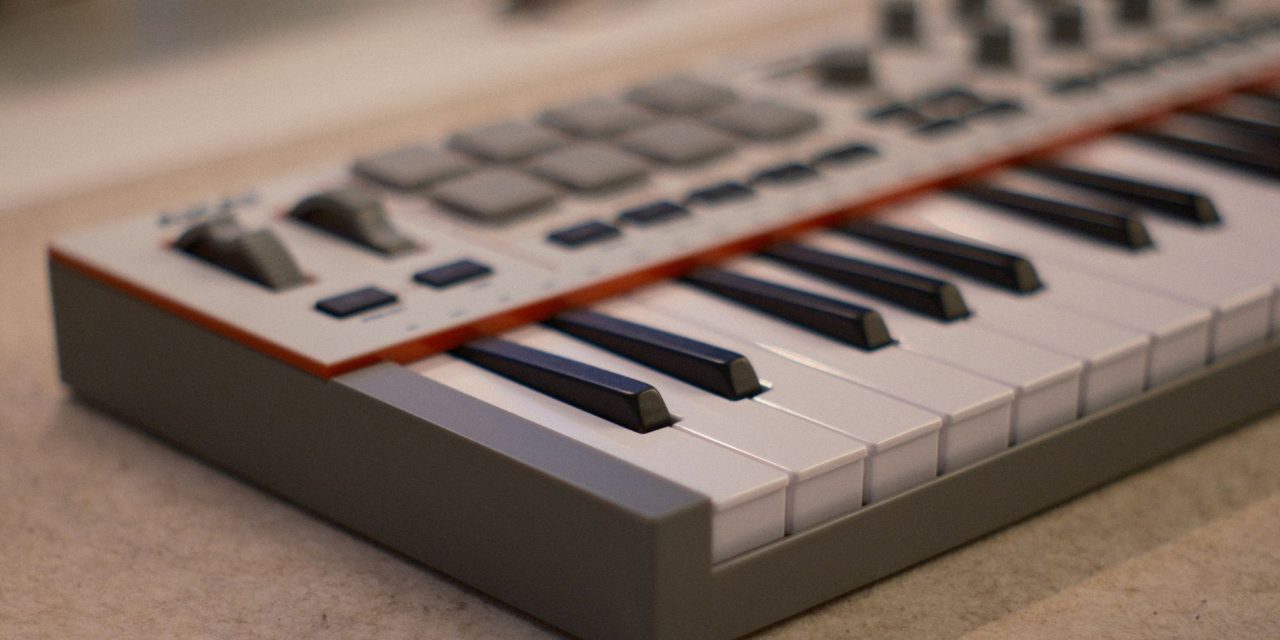
MIDI controllers are no longer just keyboards with a few extra knobs. The latest developments are pushing them toward faster wireless communication, smarter software, and much deeper interaction with DAWs.
From low-latency connectivity and cloud-synced presets to gesture control and DAW-native mapping, the hardware is becoming increasingly connected to the software around it. That could change how musicians perform, produce, and control sound in 2026 and beyond.
Wireless Connectivity Is Getting Faster
Wireless MIDI has always had one obvious question hanging over it: can it respond quickly enough to feel like a cable?
Newer wireless technologies are pushing latency lower while adding capabilities such as positioning, motion sensing, and bidirectional communication. Bluetooth, UWB, and Wi-Fi-based approaches each offer different advantages, depending on whether the priority is responsiveness, range, or precise positioning.
| Protocol | Approx. Latency | Potential Use |
| BLE MIDI | ~30ms | Basic wireless MIDI |
| Bluetooth LE Audio | ~2ms | Responsive wireless control |
| UWB | ~0.5ms | Positioning and motion control |
| Wi-Fi 6 | ~1ms | High-bandwidth connectivity |
The practical difference is important. A controller used for slow parameter changes can tolerate more latency than a device triggering drums or expressive instrument articulations in real time.
Wireless controllers can also combine connectivity with accelerometers, gyroscopes, and pressure-sensitive surfaces. Tilt, movement, and touch can become musical controls rather than simply physical gestures.
That opens interesting possibilities for future MIDI controllers designed for live performance, electronic instruments, and experimental production.
Cloud-Synced Presets Could Change the Workflow
Imagine opening a project in the studio and having your controller automatically restore the exact mappings you used yesterday.
That is the promise behind cloud-synced presets. Instead of manually recreating mappings and controller configurations, musicians can store versions of their setups and access them across compatible devices.
A more advanced system could support:
- Versioned presets for tracking changes.
- A/B morphing between different configurations.
- Remote collaboration for shared setups.
- Automatic firmware and preset updates.
- Controller-specific mappings saved with projects.
For producers working across multiple devices, this could remove a surprisingly annoying part of music production: remembering how everything was mapped in the first place.
It also creates opportunities for more collaborative workflows. A producer could build a custom controller configuration, save it, and share the setup with another musician working remotely.
Security becomes increasingly important as these systems become more connected. Cloud storage, account protection, and encrypted communication all matter when custom mappings and project configurations are being stored remotely.
DAW Integration Is Becoming a Two-Way Conversation
The biggest change may not be wireless at all. It is the increasingly deep relationship between controllers and the DAWs they operate.
Traditional MIDI controllers largely send information to the software. Modern DAW integration is moving toward a two-way relationship where the software can also communicate information back to the hardware.
That could mean controller LEDs reflecting transport status, displays showing parameter names, or controls automatically adapting to the instrument or plugin currently being used.
MPE adds another layer of expression. Instead of one MIDI note simply communicating pitch and velocity, compatible controllers can provide additional information such as pressure, slide, and per-note movement.
This gives performers far more control over software instruments.
A synth pad, for example, could respond differently depending on how hard each note is pressed or how a finger moves across the controller. The result feels less like operating a collection of software parameters and more like actually playing an instrument.
Smarter Controllers, More Expressive Performance
The next generation of controllers is likely to combine several of these developments rather than relying on one breakthrough.
Picture a battery-powered controller with:
- Wireless MIDI
- Gesture and motion sensing
- Polyphonic aftertouch
- Haptic feedback
- Cloud-synced presets
- MPE support
- Bidirectional DAW communication
- Customizable touchscreen controls
That combination could make controllers considerably more expressive while also making them more portable.
But more features do not automatically mean a better instrument. A controller with dozens of clever functions can still be frustrating if the controls feel unnatural or the software integration is unreliable.
For musicians, the important question is therefore less “How many features does it have?” and more “Does it make controlling music feel better?”
What This Means for 2026 MIDI Controllers
The broader controller trends point toward a future where hardware and software increasingly behave like one system.
Wireless connectivity removes physical limitations. Cloud synchronization reduces setup friction. MPE and pressure-sensitive controls add expression. Deep DAW integration allows hardware to respond to what is happening inside the project.
The result is a shift from controllers as simple input devices toward interactive musical instruments.
For producers and performers, that could make everything from live parameter manipulation to expressive software instruments feel more immediate. The technology is getting smarter—but the real test will always be whether musicians can turn that intelligence into better music.
Conclusion
The future of MIDI connectivity isn’t simply about cutting the cable. It is about making controllers more responsive, expressive, adaptable, and aware of the software they’re controlling.
Wireless protocols, cloud-based presets, MPE, gesture control, and deeper DAW integration are all moving in the same direction: less friction between the musician and the sound.
As 2026 unfolds, the most interesting controllers may be the ones that stop feeling like computer peripherals and start feeling like genuine musical instruments.
The cable may be disappearing, but what replaces it could change much more than your setup. See where MIDI, DAWs, and music technology are heading next on DLK Music Pro News.