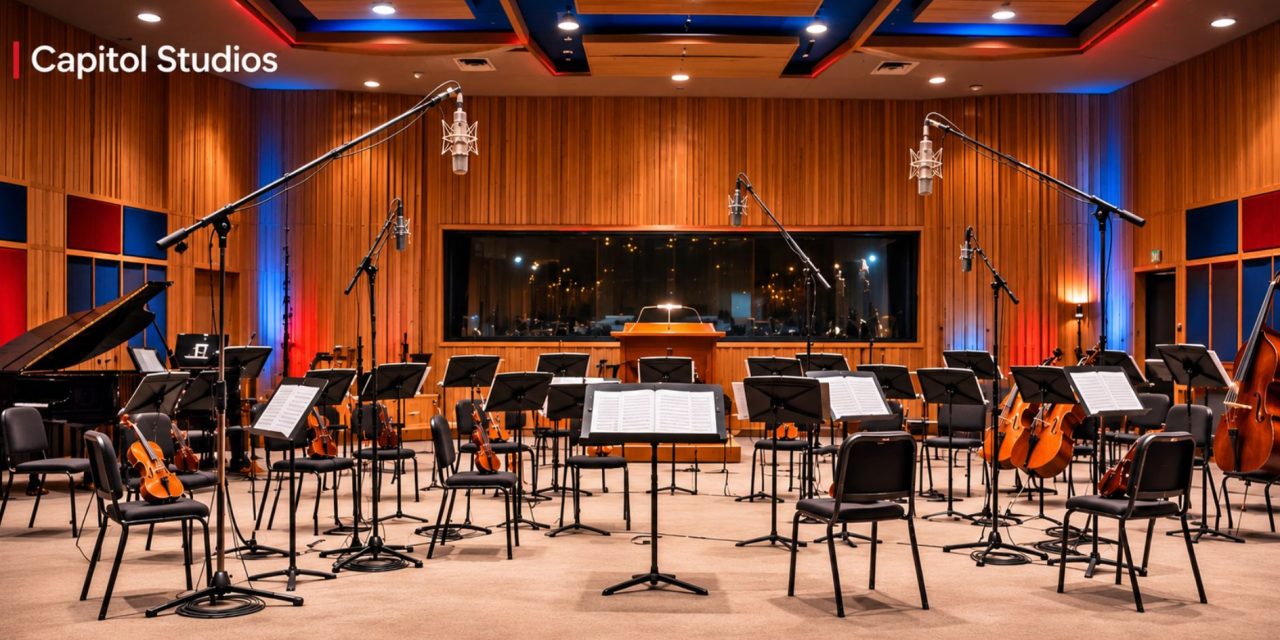
Universal Audio announced Capitol Studios on November 4, 2026, introducing a new native room-modeling and reverb plug-in. Available for macOS and Windows, it brings modeled recording environments into music production without dedicated DSP hardware.
Rather than selecting an ambience preset alone, producers can explore modeled rooms, microphone placements and processing. The plug-in focuses on recreating aspects of Capitol Studios A and B within a virtual recording environment.
Native Processing Changes the Hardware Question
According to UA’s official announcement, Capitol Studios brings two iconic recording spaces into the new plug-in. KVR’s November 5 report confirms its virtual microphones, consoles, outboard processors and four underground echo chambers.
UA’s product FAQ confirms that Capitol Studios runs directly on the computer’s processor. It does not require an Apollo interface or UAD-2 DSP hardware.
This makes the host computer, plug-in format and supported system requirements important starting points. However, native operation does not guarantee unlimited instances or comfortable monitoring latency.
Those factors depend on the computer and individual session. Producers should test representative projects before building templates around multiple room-processing instances.
Two Modes Offer Different Starting Points
UA describes Reverb mode as preserving the original recording while adding Capitol Studios ambience. Re-Mic mode reshapes the source’s modeled room and microphone characteristics.
Dynamic Room Modeling also allows virtual microphone positions to move within the modeled environment.
A practical comparison starts with the source material. Dry vocals, close-miked drums or sampled ensembles may offer opportunities for additional spatial treatment.
Recordings with pronounced existing reflections may respond differently. However, these modes do not guarantee the removal of every original room characteristic, noise or distortion.
Try one source and one microphone placement change at a time. Listen for the balance between direct sound and added ambience before returning to the full arrangement.
A pleasing solo sound can still push an important part behind the singer. It may also soften rhythmic details that need to remain prominent.
Ensemble Placement and Processing Broaden the Scope
UA includes microphone setups curated by Capitol engineer Steve Genewick. These include Decca Tree ensemble configurations for recording groups of instruments.
The plug-in also features modeled console and outboard processing, alongside its room and chamber options.
For strings, horns or grouped vocals, shared space can help separately recorded parts feel more coherent. However, producers should compare this approach against the arrangement’s existing clarity.
Adding common ambience does not mean applying identical amounts to every instrument. Each part should retain its intended position and musical importance.
Keep individual processing decisions clear during experimentation. Changing microphone position, compression, and reverb simultaneously makes improvements harder to identify.
Save intermediate versions, match comparison levels and check whether the musical focus remains intact.
Evaluate the Model Against a Recording Goal
Capitol Studios combines several aspects of studio character within one native processor. Its release offers producers another way to explore virtual recording environments and spatial processing.
However, using the plug-in does not turn a home recording into an actual Capitol session. Neither does it guarantee that every performance will resemble a familiar commercial recording.
Start with a specific goal, such as greater ensemble cohesion, a different sense of distance or additional chamber texture. Compare the result against the untouched source before deciding whether the processing improves the production.
The final decision should consider musical impact alongside computer processing demands and session recall. Ultimately, the best result is one that supports the production rather than simply adding another layer of studio character.
How much can virtual room placement change the character of a recording? Explore more production tools, studio developments and industry updates at DLK Music Pro News.