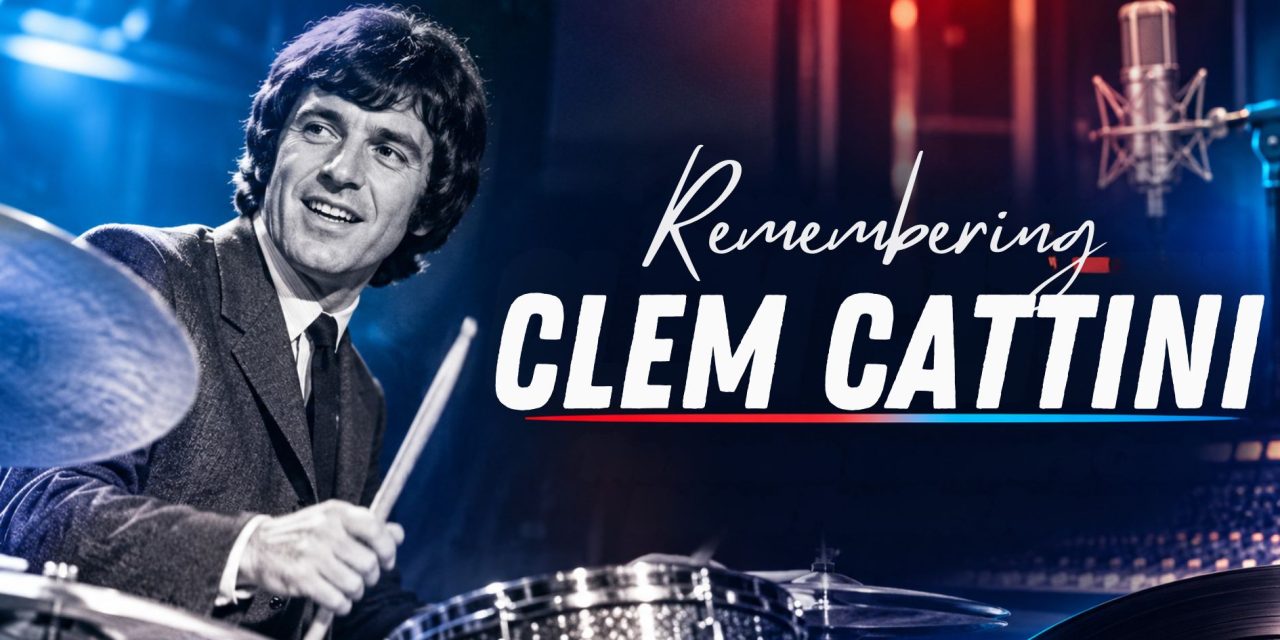
Clem Cattini, the drummer whose career connected The Tornados with decades of session work, died on November 2, 2026, aged 89. His death was reported by the Doncaster Free Press on November 4, with The Independent also confirming the news.
Cattini’s contribution extended well beyond his association with familiar records. He was a musician who moved between band performances, studio sessions, television work and touring. Tributes from artists including Tony Christie, Donovan and Carl Palmer remember not only his playing, but also the influence he had on fellow musicians.
For producers and recording musicians, his career offers a closer look at the work behind a successful session: preparing for unfamiliar material, responding to the people in the room and delivering a part that serves the song.
From The Tornados To The Recording Studio
Cattini co-founded The Tornados in 1961, the group known for the instrumental hit “Telstar.” However, his session career had already begun. Notes published by Session Stories place his first session work in 1959, alongside his live performances.
That studio work eventually connected him with artists across different musical styles. His credits included recordings by Cliff Richard, Roy Orbison and Tony Christie. He also performed with the BBC’s Top of the Pops orchestra and toured with Cliff Richard and Roy Orbison.
Christie’s tribute offers a personal example of that contribution. He recalled that Cattini played on his early MCA albums and hit singles, including “(Is This the Way to) Amarillo?” He described him as both a world-class musician and a gentleman.
Donovan also remembered Cattini’s work on “Hurdy Gurdy Man.” Meanwhile, Carl Palmer acknowledged the doors Cattini had opened for drummers across the UK. These tributes place his influence in both the recordings themselves and the musicians who followed his work.
The Discipline Behind A Session
The Session Stories document, which summarizes Cattini’s recollections, provides a useful glimpse into the demands of his working life. Sessions were organized into defined three-hour slots, with bookings running from 10 a.m. to 1 p.m. and 2 p.m. to 5 p.m.
The schedule could be intense. The notes record one week in which he completed 21 sessions. He sometimes arrived without knowing exactly what the job involved, making preparation and adaptability essential.
The recording technology of that time also left little room for mistakes. With limited track capacity, a mistake could mean restarting the entire performance. The notes describe the pressure of getting parts right the first time, particularly when several musicians were working together.
Cattini also recalled learning to read music after a difficult session exposed a gap in his preparation. The document describes the experience as a turning point in the discipline he brought to subsequent work.
These recollections show that session musicianship involved more than playing well. It required reading the situation, understanding the material quickly and working within the practical limits of the recording process.
What Producers Can Take Into The Next Session
Cattini’s experiences raise useful questions for today’s recording teams. Does the musician understand the song’s structure? Are the arrangement, references and expectations clear before recording begins? Has the producer explained what the track needs without dictating every musical decision?
These are present-day editorial takeaways, not instructions Cattini directly gave to modern producers. They follow from the demands described in his recollections.
A clear brief can help a player prepare for an unfamiliar session. Organized materials and realistic time expectations can also reduce unnecessary interruptions. At the same time, producers need to leave room for musicians to apply their own judgment and experience.
His career also reminds us to recognize the people behind a recording. The featured artist may carry the public identity of a song, but session players contribute to the performance that listeners remember. Accurate credits and thoughtful acknowledgment help preserve that collaborative history.
Remembering The Musician Behind The Records
Clem Cattini’s career moved between the visibility of The Tornados and the often less visible work of the recording studio. The tributes from his collaborators recognize a musician whose playing supported a wide range of artists and recordings.
His recollections also preserve a picture of session work built around preparation, adaptability and discipline. For producers, that history offers a reason to value the musicians who help bring an arrangement to life.
How many songs we know and love owe part of their sound to musicians working outside the spotlight? At DLK Music Pro News, we continue to celebrate the artists, session players and recording professionals whose craft helps make the music.