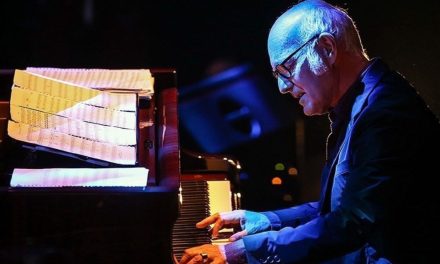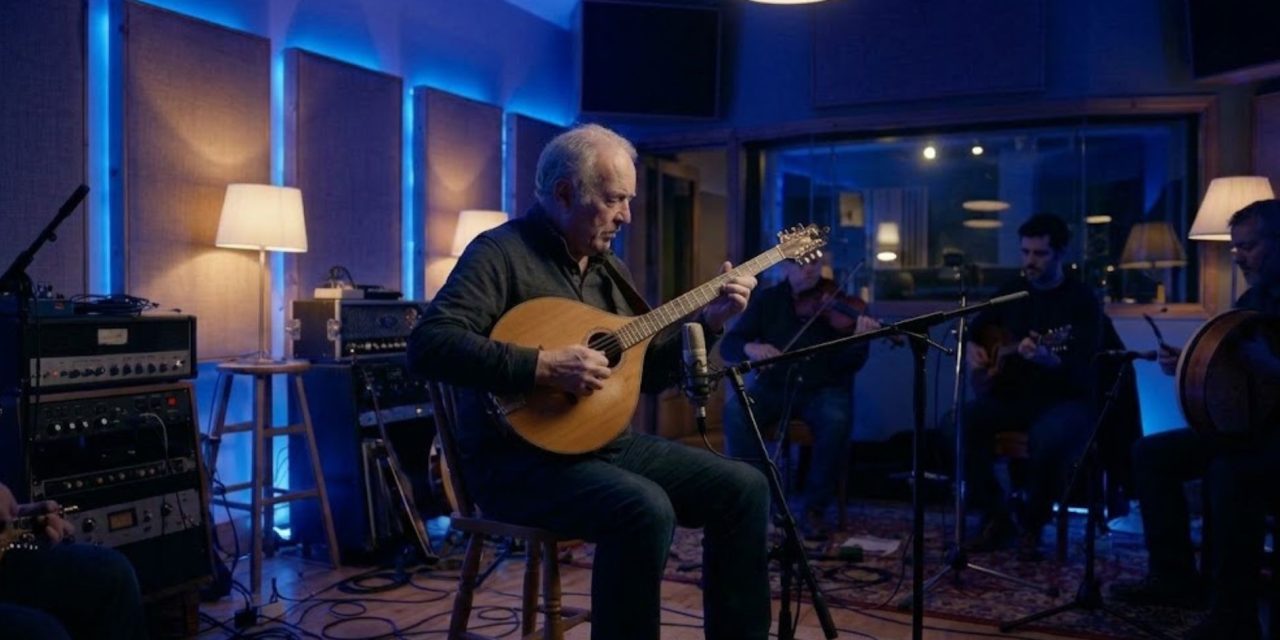
Dónal Lunny, the Irish multi-instrumentalist, arranger and record producer whose work helped reshape modern traditional music, died on October 23, 2026, at age 79. His official account confirmed that he died peacefully in Dublin following a short stay at St James’s Hospital. RTÉ, the Arts Council of Ireland and The Irish Times also reported his death and recognized a career spanning more than six decades. [1–4]
For producers, Lunny’s legacy reaches beyond any single album or ensemble. His work offers a lasting lesson in bringing inherited music into a new era without treating tradition as a museum piece. He demonstrated how musicianship, thoughtful arrangement and collaboration could expand a musical tradition while preserving its character.
A Musician Who Produced From Inside the Music
Lunny was known for guitar and bouzouki, and he also played keyboards, bodhrán and mandolin. His understanding of instruments and ensemble playing informed his work as a musician, arranger and producer. The Irish Traditional Music Archive credits him with opening new harmonic and rhythmic possibilities within Irish traditional music. [5]
He was central to Planxty, The Bothy Band and Moving Hearts, groups that helped expand the sound and reach of Irish traditional music. The Arts Council of Ireland recognized his influence on the traditional music revival, while the archive emphasized his contribution to the music’s evolving harmonic and rhythmic language. [1, 5]
That phrase—within the tradition—is key. Lunny’s approach did not depend on replacing the character of the source material. Instead, he found ways to arrange, frame and connect it with contemporary listeners. His work with Moving Hearts brought traditional musicianship into conversation with a broader instrumental palette, including bass, drums and saxophone. [4]
For contemporary producers, the lesson is to understand the music before deciding how to reshape it. Knowing the tradition makes it easier to distinguish the elements that give a piece its identity from those that can be reimagined.
Arrangement as Production
Modern production is often discussed in terms of software, microphones and signal processing. Lunny’s career is a reminder that arrangement can be one of a producer’s most powerful tools.
A traditional melody may already carry generations of meaning. The producer’s challenge is deciding what surrounds it: which instrument establishes the pulse, where the harmony should widen, when a countermelody should enter and when the ensemble should leave space.
Lunny’s work demonstrated how these decisions could make traditional material feel immediate without stripping away its roots. The same creative question applies to gospel, soul, jazz and other living traditions: how can artists make familiar forms speak to contemporary audiences without flattening what makes them distinctive?
For producers, the answer begins with listening and arrangement choices rather than adding layers automatically. Sometimes a new rhythmic foundation opens up a melody. At other times, a carefully placed instrumental response or a little more space gives the existing performance greater impact.
Three Lessons for Today’s Producers
1. Learn the Language Before Changing It
Innovation carries more weight when it begins with close knowledge of the form. Producers working with traditional or culturally rooted music should understand its rhythm, phrasing, instrumentation and social setting before introducing new textures.
That does not mean copying the past. It means recognizing which elements carry the music’s identity and which can evolve. Lunny’s career offers a documented example of that balance: his arrangements opened new possibilities while remaining rooted in Irish musical traditions. [4, 5]
2. Let Contrast Create Energy
Acoustic and electronic instruments do not have to cancel each other out. Moving Hearts showed how traditional musical ideas could work within a broader contemporary sound, with a rhythm section and additional instruments expanding the ensemble’s possibilities. [4]
The useful question is not whether a sound is old or new, but whether it serves the musical idea. Producers can explore contrast through an acoustic performance against a restrained electronic layer, an exposed melody against richer harmony, or a hand-played pulse alongside a carefully controlled rhythm bed.
These are possible applications of the principle, not claims about Lunny’s specific studio methods. The aim is to make each element contribute to the arrangement rather than compete for attention.
3. Build Around Human Interaction
Lunny’s career was rooted in collaboration. His work with Planxty, The Bothy Band and Moving Hearts placed musical relationships at the center of the finished sound. His broader career also included collaborations with artists from different musical backgrounds. [1, 4, 5]
Producers can preserve that sense of interaction by recording musicians together when appropriate, retaining expressive timing and making arrangement decisions around the performance. Editing can improve clarity, but excessive correction may remove the subtle responses that make musicians sound connected.
Precision should support the performance, not become a substitute for musical conversation.
A Legacy Across the Studio and Stage
Lunny’s influence extended through his production and collaborative work with artists including Christy Moore, Sinéad O’Connor and Elvis Costello.
He also co-founded Mulligan Records, producing 17 albums for the label, according to the Arts Council and Aosdána statement. [1] His contribution therefore reached beyond performing: he helped develop projects, shape arrangements and bring music to audiences.
That breadth remains relevant today. Independent producers often move between composing, performing, engineering, arranging and artist development. Lunny’s career shows how these roles can reinforce one another when they serve a clear musical purpose.
His death is a major loss for Irish music and culture. Yet his recordings remain valuable examples of how tradition can evolve through careful listening, inventive arrangement and respect for the musicians involved.
How can you introduce new sounds without losing the character of the music? Explore more stories about production, arrangement and the people shaping music at DLK Music Pro.
Sources
[1] The Arts Council of Ireland and Aosdána — “The Arts Council and Aosdána Express Sadness at the Death of Musician and Aosdána Member Dónal Lunny (1947–2026)”. October 23, 2026. Career history, musical contributions and production work.
[2] RTÉ — “Renowned Irish Musician Dónal Lunny Dies Aged 79”. October 23, 2026. Career overview, collaborations and production credits.
[3] The Irish Times — “Dónal Lunny’s Legacy Will Be His Openness to New Ways of Interpreting Old Music”. October 23, 2026. Analysis of his arrangements and musical innovations.
[4] The Irish Times — “Dónal Lunny Obituary: Innovative Musician Who Leaves Indelible Mark on Irish Folk and Traditional Music”. October 24, 2026. Career, collaborations and the musical development of his ensembles.
[5] Irish Traditional Music Archive — “Dónal Lunny (1947–2026)”. October 23, 2026. Instruments, musical legacy and contributions to Irish traditional music.