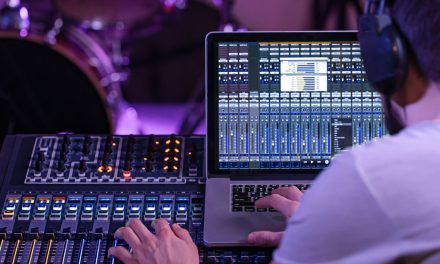
The modern studio is becoming less about choosing one piece of software and more about getting everything to work together.
DAWs, video editors, plugins, cloud storage, and collaboration platforms are increasingly moving toward shared standards and connected workflows. For producers, that could mean fewer compatibility headaches and a much smoother path from recording to mixing, editing, and delivery.
Unified DAWs and Video Editors
Music and video production increasingly overlap, especially for producers working on film, podcasts, social content, and other multimedia projects.
Better integration between DAWs and video editors allows audio projects to move between applications with fewer conversions and less manual setup. Instead of exporting files, converting formats, and rebuilding sessions, producers can move between stages of a project more efficiently.
The biggest benefits include:
- Shared immersive-audio workflows such as Dolby Atmos.
- Better plugin compatibility between production environments.
- Native optimization for modern processors such as Apple Silicon.
- Cloud-based project access and collaboration.
- Faster movement between music production and video editing.
For a film-scoring workflow, for example, a composer can develop the music in a DAW before moving the project into a video environment for final synchronization.
Podcast producers can benefit in a similar way, moving between dialogue editing, music, sound design, and video without constantly rebuilding the project.
This kind of integration makes studio setups more flexible. One workstation can increasingly handle several stages of production rather than requiring a separate computer for every task.
Plugin Standardization Efforts
Plugins have traditionally been one of the less glamorous headaches of music production.
Different DAWs support different formats, operating systems behave differently, and developers often have to maintain several versions of the same plugin. Producers, meanwhile, simply want the plugin to open without causing a small technological crisis.
Standardization efforts aim to reduce that friction.
The broader move toward more unified plugin frameworks could make it easier for developers to maintain software across different production environments. That matters as studios become increasingly dependent on software instruments, effects, samplers, and AI-powered production tools.
Newer standards are also expected to support developments such as:
- MIDI 2.0
- Higher channel counts
- More scalable interfaces
- Improved automation
- Better communication between plugins and DAWs
- More consistent cross-platform performance
For producers, the practical advantage is straightforward: fewer compatibility problems and easier movement between different systems.
It also helps developers build more advanced tools without having to maintain completely separate systems for every host application.
Cloud-Hybrid Workflow Integration
Cloud technology is becoming another major part of the production ecosystem.
Rather than moving everything into the cloud, many creators are adopting cloud-hybrid workflows. Active projects remain on local SSDs or high-speed storage, while collaboration, backups, project sharing, and selected assets are handled remotely.
That approach can offer the best of both worlds.
Local storage provides fast access to large sample libraries, sessions, and media files. Cloud services make it easier for collaborators to access projects without being in the same physical studio.
Common examples include:
- iCloud-based workflows for Logic Pro projects.
- Adobe Team Projects for collaborative video production.
- Splice integration for sample and sound-library access.
- Cloud storage for project backups and shared assets.
- Remote collaboration between producers, engineers, and editors.
For independent producers, this can reduce the need for expensive physical infrastructure.
A beatmaker in one location can share a session with a vocalist somewhere else. A producer can send stems to an engineer without physically moving a drive. A video editor can access updated audio without waiting for a complete file transfer.
The studio becomes less of a room and more of a connected production environment.
What This Means for the Modern Studio
The biggest change isn’t necessarily one new plugin format or cloud service.
It is the gradual disappearance of the boundaries between different parts of production.
Music software increasingly communicates with video software. Plugins are becoming more standardized. Cloud platforms connect collaborators. Local workstations handle increasingly demanding processing while remote services take care of storage and collaboration.
This supports the growth of all-in-one production workstations, particularly for independent creators working from compact spaces.
A modern setup might combine:
High-performance workstation + NVMe storage + DAW + video editor + cloud collaboration + standardized plugins
That combination can handle music, podcasts, film scoring, sound design, and content creation without requiring a room full of dedicated hardware.
The Benefits for Independent Producers
For independent producers and small studios, ecosystem convergence could have an even bigger impact.
Instead of constantly upgrading around compatibility problems, creators can build systems around interoperability and scalability.
A producer might start with a compact home studio, then add faster storage, more processing power, additional interfaces, and cloud collaboration as their workload grows.
That makes future upgrades less about replacing everything and more about expanding what already works.
The same principle applies to software. If plugins, DAWs, and cloud platforms communicate more effectively, producers can spend less time troubleshooting technical barriers and more time actually producing.
Conclusion
Software ecosystem convergence is quietly changing what a studio can be.
The traditional boundaries between DAWs, video editors, plugins, local hardware, and cloud services are becoming less rigid. As these systems communicate more effectively, creators can build smaller but more capable production environments.
For independent producers, the real win is flexibility: one connected ecosystem that can grow with the work instead of constantly getting in its way.
Could your next studio upgrade be less about buying more gear and more about making the gear and software you already own work together? Follow the technology behind smarter studios, connected workflows, and the next generation of production tools on DLK Music Pro News.